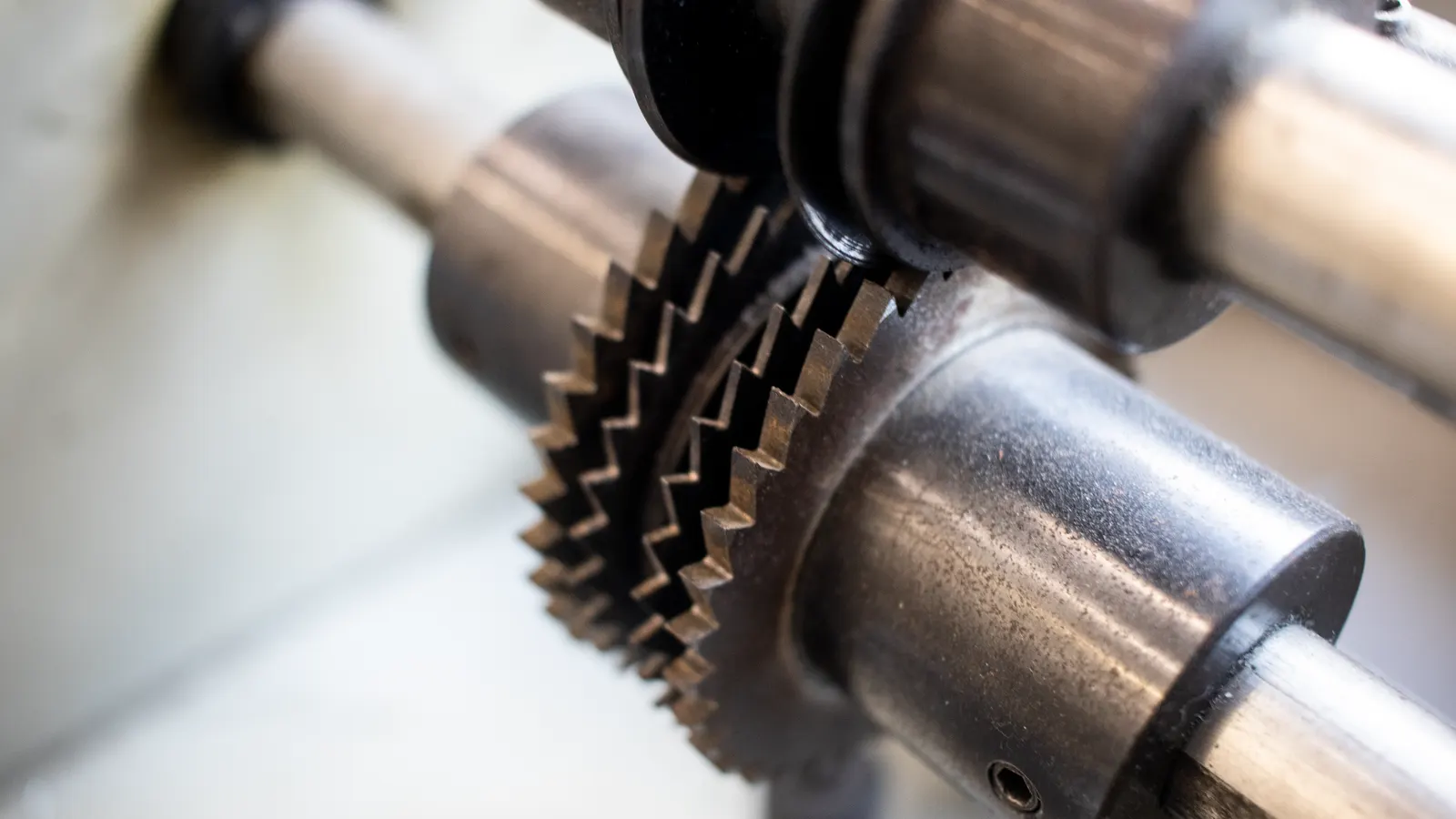
A round slicer excels at high-volume, uniform slices for deli meats and cheeses. A guillotine cutter is better for block products and smaller batches. The right choice depends on product shape, required slice thickness, and production speed.
- Round slicers produce uniform slices for cylindrical and cylindrical-like products at high speed.
- Guillotine cutters handle block and irregular shapes better but have lower throughput.
- Blade type, guard design, and cleaning access drive long-term operating costs.
- Match the machine to product dimensions before considering speed or budget.
- Hygienic design and maintenance access matter more than initial price for most facilities.
Why the choice depends on product shape
The first factor in choosing between a round slicer and a guillotine cutter is the product itself. Deli meats, cheese wheels, and cured fish often arrive in cylindrical form or can be presented to the blade in a way that suits a rotating disc. Block cheeses, bread loaves, and irregular cuts of meat need a straight blade that travels across the product in one motion. A round slicer forces the product against a spinning disc. A guillotine cutter moves a blade in a fixed arc or linear path.
If your product is a wheel or a log, a round slicer usually fits better. If your product is a block, a loaf, or a piece with flat faces, a guillotine cutter is the natural choice. The wrong selection creates rework. A deli meat wheel forced into a guillotine needs a jig or manual turning. A loaf of bread on a round slicer produces uneven, curved slices that fail specification.
Throughput and consistency
Round slicers are built for continuous operation. The product moves along a table or carrier while the blade spins. The feed mechanism, whether hand-cranked or motorized, controls slice thickness. Once set, the machine produces the same thickness slice after slice. This consistency matters for retail packaging, where uniformity affects shelf appearance and portioning.
Guillotine cutters work in cycles. The operator loads a block, lowers the blade, and lifts it again. The cycle time includes loading, cutting, and unloading. Even with an assisted lift, the rate is lower than a slicer running continuously. Consistency can be high, but it depends on blade alignment, product placement, and operator discipline. A misaligned block gives a tilted cut. A worn blade gives ragged edges.
A round slicer can run for hours with minor adjustments. A guillotine cutter benefits from frequent checks of blade tension and gate alignment. Both machines need regular sharpening or replacement. The round slicer blade is often a disc with a toothed or smooth edge. The guillotine blade is a long straight edge, sometimes with a cutting guard.
Precision and slice thickness
Slice thickness is controlled differently. On a round slicer, a dial or digital control sets the gap between blade and product. Some machines use a pressure roller to hold the product close to the blade. On a guillotine cutter, the blade stops at a set depth. The product sits on a platen, and the blade descends until a sensor or mechanical stop triggers the cut.
For very thin slices, a round slicer has an advantage. The rotating blade can produce paper-thin slices for garnish or presentation. A guillotine cutter struggles below a certain thickness because the product may shift or the blade may skip. For thick cuts, both machines work well. A block of cheese can be cut into thick portions with a guillotine. A wheel of cheese can be cut into thick slices with a slicer.
The tolerance for thickness varies by application. Retail deli packs need tight tolerances. Bulk processing may allow more variation. If your customer or internal spec requires a narrow tolerance, measure the actual output. Do not rely on the manufacturer’s nominal setting. Run a test batch and record the results.
Space and workflow
A round slicer has a footprint shaped by the blade diameter and the product table. The blade is often exposed during operation, so guards and splash shields are needed. The machine may need a small buffer zone for product in and finished product out. A guillotine cutter is usually more compact. The blade is enclosed in a frame, and the product sits on a platen. The footprint is often smaller, but the cycle time is longer.
In a tight plant floor, a guillotine cutter can fit where a slicer cannot. In a high-volume deli room, a slicer may occupy a dedicated station. Both machines need a clean area for setup and cleanup. Blade cleaning is a major part of daily work. A round slicer blade has a central hub and a rim. A guillotine blade has a long edge and a mounting bar. Both need food-safe cleaning agents and proper drying to prevent corrosion.
The workflow around each machine differs. A slicer often has a conveyor or a feed table. Product moves in, slices fall onto a tray or belt. A guillotine cutter has a platen and a product holder. Product is placed, cut, and removed. The guillotine may be easier to integrate into a small line. The slicer is better when multiple operators work in sequence.
Hygiene and maintenance
Hygiene is a constant in food processing. Both machines need easy-to-clean surfaces. Look for welded, polished stainless steel frames. Avoid crevices where product residue can accumulate. The blade area is the highest risk. A round slicer blade may have a guard that opens for cleaning. A guillotine cutter blade may be removable or have a hinged cover.
Maintenance schedules differ. A round slicer requires blade balancing. If the blade is out of balance, it vibrates, which affects slice quality and increases wear. Check the blade for chips, nicks, and uneven wear. A guillotine cutter requires blade alignment. If the blade is not parallel to the platen, cuts are uneven. Check the stop mechanism and the lift mechanism.
Both machines have moving parts that need lubrication. Use food-grade lubricants only. Keep records of blade replacement and cleaning. A worn blade is a quality risk and a safety risk. A dull blade requires more force and can slip. A sharp blade cuts cleanly with less pressure.
Cost and operating model
Purchase price is only part of the cost. A high-volume round slicer may cost more upfront but has a lower cost per slice. A guillotine cutter may be cheaper to buy but costs more per cycle due to labor. Labor cost depends on the operator’s speed and the batch size. If you cut small batches frequently, the guillotine may be efficient. If you cut large wheels for hours, the slicer is more efficient.
Energy use is usually minor compared to labor. Both machines use electric motors. A round slicer motor runs continuously during operation. A guillotine cutter motor runs during the cut cycle. The difference is small in most facilities.
Maintenance cost is significant. Blade replacement is the biggest recurring expense. A round slicer blade is a disc. A guillotine blade is a straight bar. Prices vary by size and material. Factor in sharpening, guard replacement, and motor wear. A machine that is hard to clean or maintain will cost more over its life.
Comparison table
| Option | Best for | Limitations |
|---|---|---|
| Round slicer | High-volume deli meats, cheese wheels, cured fish, uniform thin slices | Requires cylindrical or adaptable product; higher blade wear at high speed |
| Guillotine cutter | Block cheeses, bread, irregular meat cuts, small batches | Lower throughput; cycle time limits speed; less suited to very thin slices |
| Motorized round slicer | Continuous production lines, tight thickness tolerance | Higher initial cost; needs space for feed and output; more complex guards |
| Manual guillotine cutter | Low-volume facilities, occasional block cuts | Operator dependent; slower; more variation in cut quality |
| Automated guillotine | Consistent block cuts with minimal labor | High capital cost; needs product sizing to fit platen; limited flexibility |
When to pick a round slicer
Choose a round slicer when your product is a wheel, a log, or a cylindrical form. Deli meat, cheese, and fish often fit this category. If you need many slices per hour, a slicer is the better tool. If you need thin, uniform slices for retail packs, a slicer gives you that control. If your facility has space for a feed table and a guard, a slicer fits the workflow.
A round slicer is also better when multiple operators work the line. One operator can feed product while another collects slices. The machine can run while the operator adjusts the thickness. The consistency is high when the blade is sharp and the feed is steady.
A slicer is not ideal for block products. A loaf of bread on a slicer produces curved slices. A block of cheese needs to be turned to present a flat face. The rework time can exceed the savings. If your product is block-shaped, consider a guillotine cutter or a different cutting method.
When to pick a guillotine cutter
Choose a guillotine cutter when your product is a block, a loaf, or an irregular shape. Block cheeses, bread, and certain meat portions fit well. If you run small batches, the guillotine is flexible. You can change the block size and cut thickness quickly. The cycle time is longer, but the setup is simple.
A guillotine cutter is also better when the product is too large or too irregular for a slicer. A large wheel of cheese can be cut into wedges with a guillotine. A loaf of bread can be cut into slices or portions. The blade can handle different shapes if the product is placed correctly.
A guillotine is not ideal for high-volume thin slicing. The cycle time limits the rate. The blade may not handle very thin slices without shifting the product. If your spec requires thin, uniform slices from a wheel, a slicer is the better choice.
Final selection checklist
- Measure the product. Record the maximum diameter, length, and weight. Check for irregular shapes.
- Define the slice thickness. State the nominal thickness and the acceptable tolerance.
- Estimate the hourly output. Count how many slices or portions you need per hour.
- Check the floor space. Measure the area for the machine, the operator, and the product flow.
- Review the hygiene requirements. Confirm that the machine meets your cleaning standards and local rules.
- Test the blade life. Ask for information on blade material, replacement interval, and sharpening method.
- Check the guard and safety features. Confirm that the guard locks, opens for cleaning, and prevents accidental contact.
- Plan the maintenance access. Confirm that the blade, motor, and controls can be reached without disassembling the frame.
The right machine is the one that matches the product and the workflow. A round slicer is a high-speed tool for cylindrical products. A guillotine cutter is a flexible tool for block products. Measure the product, define the tolerance, and estimate the output before deciding. The machine that fits the process will outperform the machine that looks better on paper.
Frequently asked questions
Can a guillotine cutter produce thin slices like a round slicer?
A guillotine cutter can produce thin slices, but the product must be held firmly on the platen. Very thin slices are harder to keep uniform because the product can shift during the cut.
Is a round slicer better for block products?
No. A round slicer works best with cylindrical or log-shaped products. Block products need to be turned or jigged to present a flat face, which adds time and variation.
Which machine is easier to clean?
Both can be cleaned well if designed with smooth, welded surfaces. A guillotine cutter often has a simpler blade area. A round slicer has a larger blade and more guard parts to remove.
Do I need a motorized version?
A motorized version reduces operator effort and improves consistency. A manual version is fine for low-volume or occasional use. The choice depends on your hourly output and labor cost.
How often should I replace the blade?
It depends on the product, blade material, and cutting volume. Check the blade for chips, dullness, and uneven wear. Replace it when the cut quality drops or the blade shows visible damage.