A rotary slicer handles whole loaves and high-volume processing with a continuous blade, while a guillotine slicer excels at precise, low-volume cuts. The choice depends on product size, required thickness accuracy, and budget.
- Rotary slicers offer continuous throughput and handle large product volumes efficiently.
- Guillotine slicers provide precise, repeatable cuts ideal for smaller or delicate items.
- Blade diameter selection directly impacts the maximum product width and cutting accuracy.
- CIP access and blade change frequency should be evaluated before final selection.
- Safety interlocks and guard systems are non-negotiable features in both slicer types.
Deli meat production demands consistent thickness, minimal waste, and high operator safety. The two most common solutions are the rotary slicer and the guillotine slicer. Each machine uses a distinct cutting mechanism to achieve the same end goal. The decision between them hinges on product size, volume, and the specific characteristics of the deli meat being processed.
How the Rotary Slicer Mechanism Works
The rotary slicer uses a large circular blade that spins at a constant speed. A handwheel or motorized feed mechanism moves the product against the blade edge. The blade diameter determines the maximum width of the product that can be sliced. Common sizes range from medium to very large, accommodating whole hams, large turkey breasts, and full cases of processed meats.
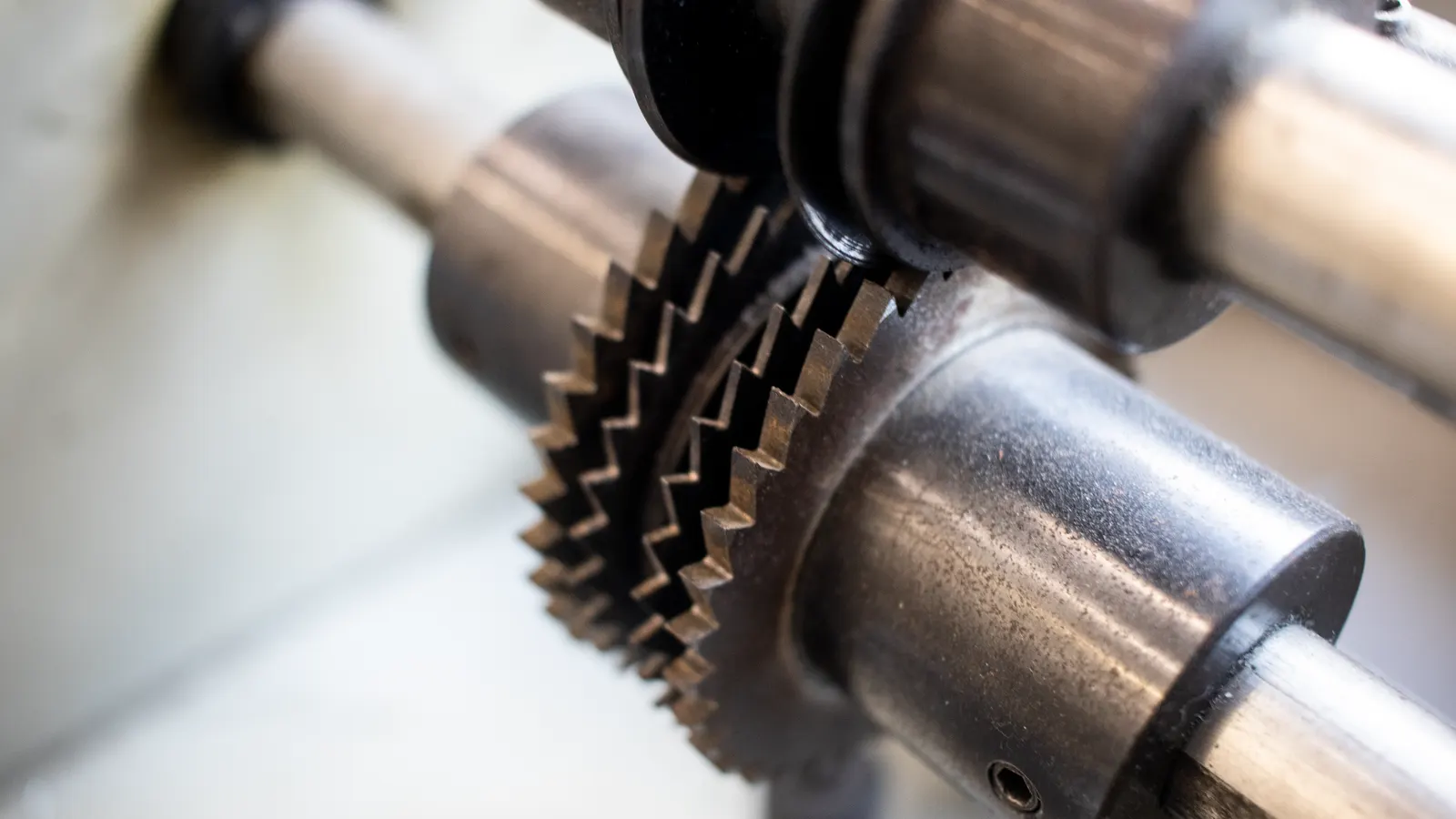
The blade system includes a circular cutting edge, a tensioning ring, and a guard assembly. The blade must be kept sharp to ensure clean cuts. Dull blades increase friction, which can cause the meat to tear or stick to the blade. This leads to product loss and increased cleaning time.
Throughput on a rotary slicer is high. One operator can process multiple loaves or cases per hour. The continuous motion allows the operator to work at a steady pace without stopping and starting for each slice. This makes the rotary slicer well suited for high-volume deli meat production lines.
How the Guillotine Slicer Mechanism Works
The guillotine slicer uses a vertical blade that moves down through the product in a single stroke. The product is placed on a carriage or fixed platform. The operator lowers the blade to cut through the meat. The blade retracts after each cut.
This mechanism provides a clean, precise cut because the blade travels in a straight path. The thickness is set by a gauge or digital control. Each slice is identical, which is useful for retail packaging where uniformity matters. The guillotine slicer is often used for smaller items, such as individually wrapped slices, or for products that are too delicate for continuous blade contact.
The cutting speed is slower than a rotary slicer. Each cut requires a full cycle of lowering and raising the blade. This limits throughput. For high-volume production, a guillotine slicer may require multiple units or a longer shift to match the output of a single rotary slicer.
Comparison Table
| Option | Best for | Limitations |
|---|---|---|
| Rotary slicer | High-volume whole loaves, continuous processing | Slower precision for very thin slices, requires blade sharpening |
| Guillotine slicer | Precise thin slices, small products, retail packaging | Low throughput, mechanical complexity in blade carriage |
| Manual rotary | Small batches, low budget | High operator fatigue, inconsistent speed |
| Automated rotary | High-speed lines, consistent output | Higher capital cost, complex controls |
| Manual guillotine | Occasional use, small delis | Time intensive, limited product size |
When to Choose a Rotary Slicer
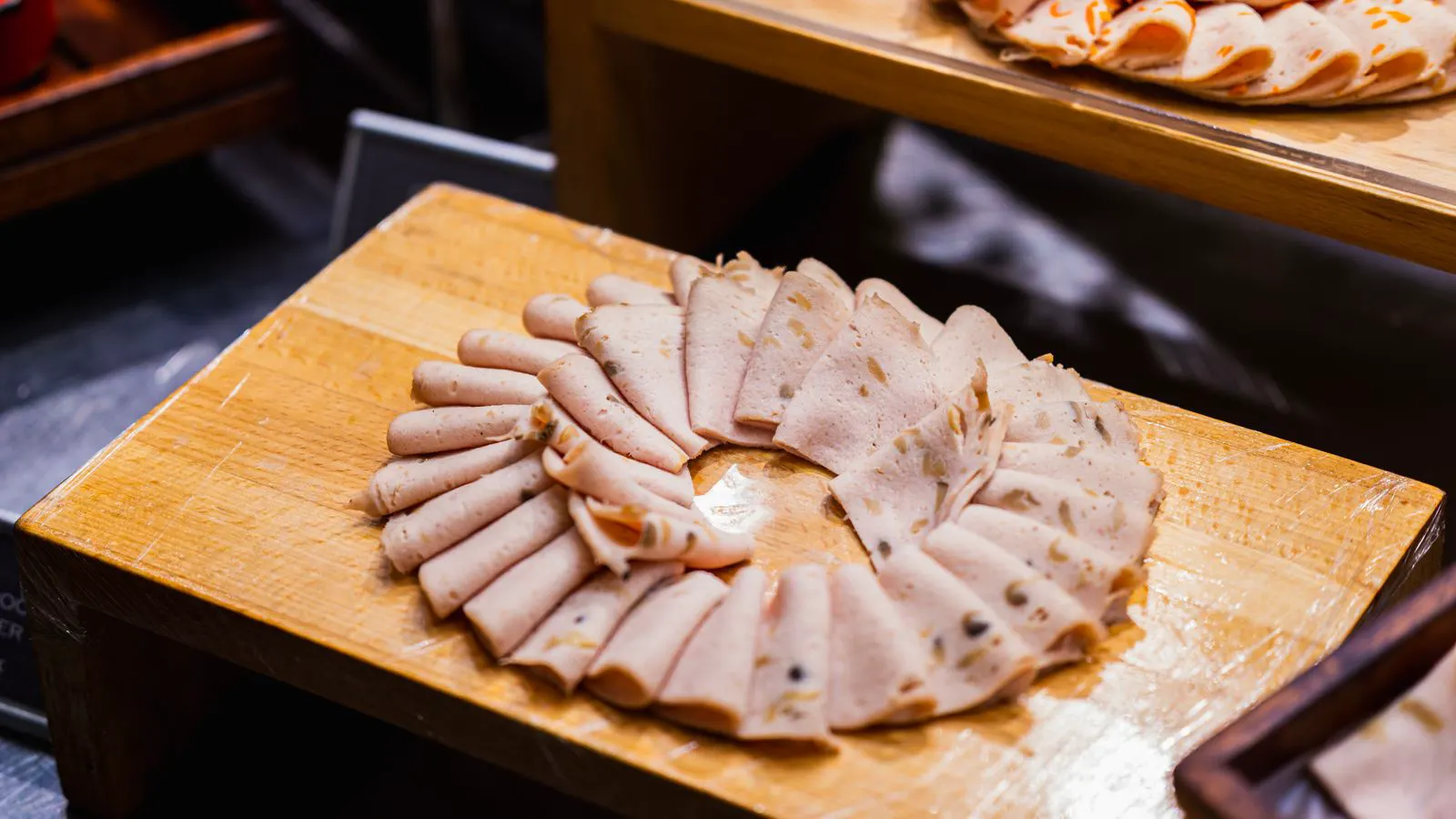
A rotary slicer is the better fit when processing whole or large sections of deli meat. If the product comes in large pieces, such as whole hams or large turkey breasts, the rotary slicer handles the full width without splitting the product. The continuous feed allows the operator to maintain a steady rhythm.
For high-volume facilities, the rotary slicer reduces labor time. One machine can produce thousands of slices per shift. The design also allows for multiple operators to work on different products if the machine is large enough. The blade diameter must match the product width. A small blade cannot handle a large ham. A large blade can handle smaller items but requires more space and power.
The rotary slicer is also preferred when the product is firm enough to withstand continuous blade contact. Firm deli meats, such as sliced roast beef or turkey, hold their shape well. The blade cuts through the product cleanly. Soft or moist products may stick to the blade, requiring more frequent cleaning and blade maintenance.
When to Choose a Guillotine Slicer
A guillotine slicer is the better fit when precision is the top priority. If the deli meat must be cut to an exact thickness for retail packaging, the guillotine slicer provides repeatable results. The vertical blade cuts through the product in one motion. There is no continuous contact, which reduces the risk of tearing.
This machine is ideal for small or delicate products. Think of thin slices of deli meat that need to be packaged individually. The guillotine slicer can handle these items without crushing or distorting them. It is also useful for products that are too small to feed into a rotary slicer, such as small patties or individual portions.
The guillotine slicer requires more mechanical care. The blade carriage must align perfectly with the product guide. Misalignment leads to uneven cuts. The blade must be sharp and properly seated in the carriage. Any slack in the mechanism causes the cut to be off-center. Maintenance schedules must include checks on the carriage guides and the blade housing.
Blade Diameter and Product Thickness
The blade diameter of a rotary slicer directly affects the maximum product width. A larger blade allows for wider products. However, the blade also must be sharp enough to cut through the product without excessive force. A dull large blade requires more power and can overheat. A sharp small blade may not handle large products efficiently.
For guillotine slicers, the blade length determines the product width. The blade must be long enough to cut through the full thickness of the meat. The thickness of the slice is controlled by a gauge or digital sensor. The operator sets the desired thickness, and the blade stops at that point. Accuracy depends on the calibration of the sensor and the rigidity of the blade.
Both slicer types require regular blade sharpening. The frequency depends on the volume of production and the density of the meat. Dense meats, such as roast beef, dull the blade faster. Lighter products, such as turkey, are easier on the blade. A blade change or sharpening schedule should be built into the daily maintenance routine.
CIP Access and Cleaning
Cleaning is a major factor in slicer selection. Both rotary and guillotine slicers must be easy to clean. Food safety regulations require that all food-contact surfaces be accessible for cleaning and inspection.
Rotary slicers have a blade housing and a product tray. The blade must be removable for cleaning. Some models allow the blade to be taken out for hand washing or immersion. Others require a disassembly of the guard and carriage. The CIP access point must be clearly marked and reachable.
Guillotine slicers have a blade carriage and a product bed. The carriage must be able to move freely for cleaning. The blade housing must allow access to the blade edge and the guide rails. Any crevice where food particles can accumulate must be avoided. A slicer with poor CIP access will lead to longer cleaning times and potential food safety risks.
Safety Features
Safety is non-negotiable in any slicing operation. Both slicer types must include blade guards, emergency stop buttons, and interlocks that prevent the blade from moving when the guard is open.
Rotary slicers have a rotating blade. The guard must cover the blade edge when not in use. The feed mechanism must be designed so that the operator’s hand is not in the path of the blade. Some models include a hand plate that pushes the product against the blade, keeping the operator’s hand away from the cutting edge.
Guillotine slicers have a vertical blade. The guard must cover the blade during the cut. The emergency stop must halt the blade carriage immediately. Interlocks should prevent the operator from reaching into the machine while the blade is moving. The blade should be designed so that it cannot fall into the product during normal operation.
Final Selection Criteria
The choice between a rotary slicer and a guillotine slicer depends on several factors. First, consider the product size. Large products require a rotary slicer with a large blade. Small or delicate products may be better suited to a guillotine slicer.
Second, consider the volume. High-volume production favors the rotary slicer for its throughput. Low-volume or batch processing may favor the guillotine slicer for its precision.
Third, consider the budget. Rotary slicers with automated feeds cost more than manual models. Guillotine slicers with digital controls also add to the cost. A manual guillotine slicer is the most affordable option but requires more operator skill.
Finally, consider the facility layout. Rotary slicers take up more floor space. Guillotine slicers are more compact. The available space and the workflow of the deli meat production line must be taken into account when selecting the machine.
Frequently asked questions
What is the main difference between a rotary slicer and a guillotine slicer?
A rotary slicer uses a spinning circular blade to cut product continuously, while a guillotine slicer uses a vertical blade that moves down in a single stroke for each cut.
Which slicer is better for high-volume deli meat production?
A rotary slicer is generally better for high-volume production because it allows continuous cutting, which increases throughput and reduces labor time.
Can a guillotine slicer handle whole hams?
A standard guillotine slicer is not designed for whole hams. The blade length and carriage size are limited. A rotary slicer with a large blade is the appropriate choice for whole hams.
How often should slicer blades be sharpened?
Blade sharpening frequency depends on production volume and meat density. Dense meats require more frequent sharpening than light meats. A regular maintenance schedule should be established based on observed blade performance.
Is a guillotine slicer safer than a rotary slicer?
Both slicers require proper safety features, including guards, interlocks, and emergency stops. Safety depends on the quality of the machine and the training of the operator, not just the slicer type.