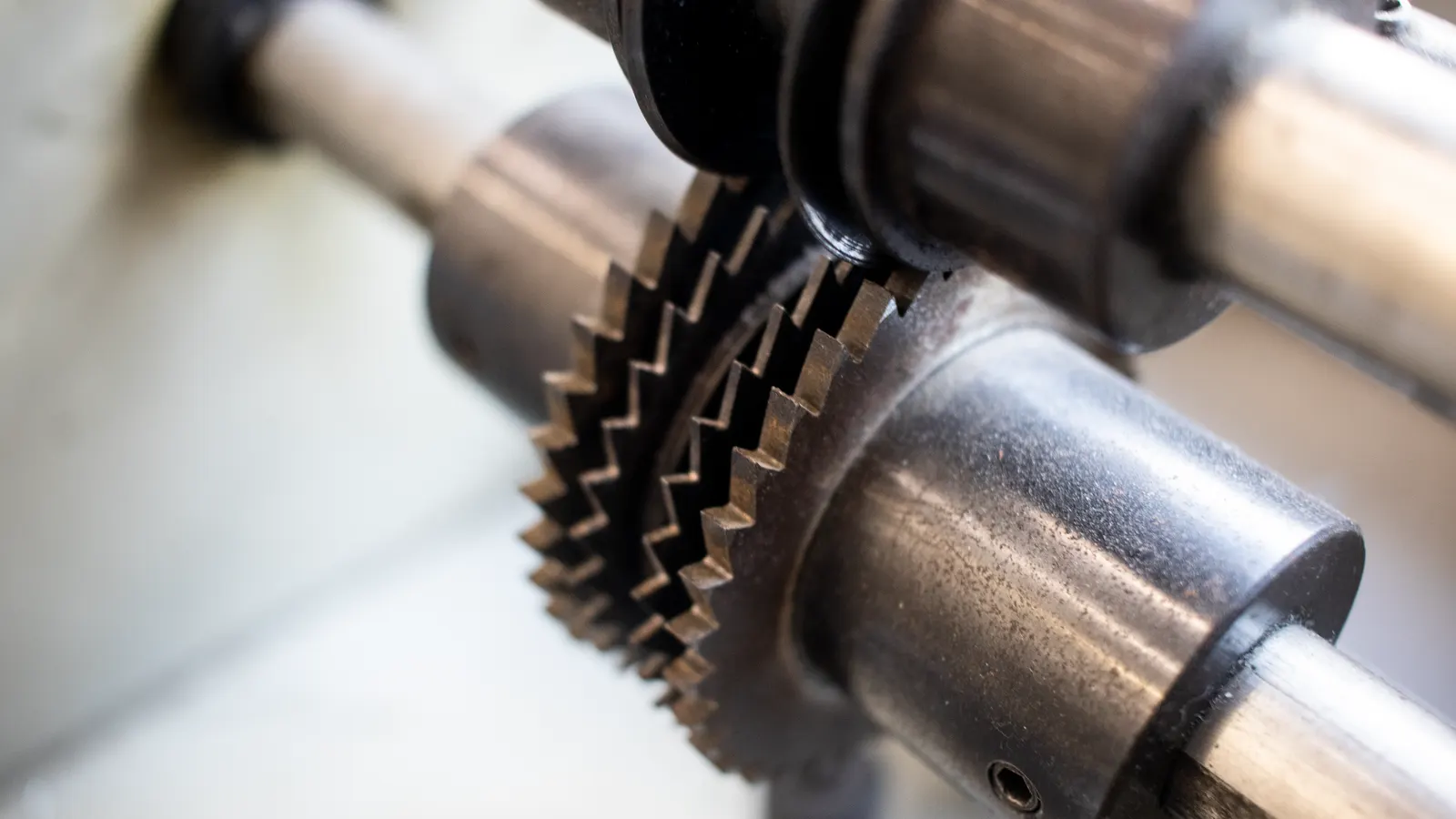
A guillotine slicer uses a horizontal carriage and a fixed, downward-striking blade to cut through product. The mechanism relies on synchronized carriage travel and blade descent to create uniform slices. Understanding these mechanics helps buyers match equipment to product density and safety needs.
- A guillotine slicer separates the cutting blade from the product carriage to reduce manual force.
- Blade action depends on synchronized carriage travel and a controlled downward stroke.
- Product density and core hardness determine the required blade force and safety interlocks.
- Sourcing decisions should prioritize carriage rigidity, blade mounting, and emergency stop integration.
- Consistent slice thickness relies on precise carriage calibration and clean blade edges.
What defines a guillotine slicer cutting mechanism
A guillotine slicer cutting mechanism differs from rotary slicers because it does not rotate the blade against the product. Instead, it lowers a straight, fixed blade from above while a carriage holds the product and moves it forward or backward under the blade. This vertical blade action creates a shearing cut rather than a grinding cut.
The core parts are the blade assembly, the carriage, the frame, and the drive system. The blade sits in a fixed housing, usually at a slight angle or perpendicular to the carriage path. The carriage carries the product and travels in a straight line. When the operator triggers the cut, the blade descends onto the product while the carriage stops or moves a set distance.
This design is common in high-volume production lines where uniform slice thickness matters. It is also common in facilities that handle dense or irregular items, such as cured meats, cheeses, or bread loaves, because the vertical drop allows the blade to engage the full thickness of the product in one pass.
How the blade action interacts with the carriage
Blade action in a guillotine slicer is a coordinated event. The blade does not simply fall by gravity. In most industrial units, a motorized or pneumatic actuator controls the descent speed and force. This control is what keeps the cut clean and prevents the blade from crushing soft items or skipping over dense ones.
The carriage moves the product into the cutting zone. In many designs, the carriage is guided by linear rails or a precision track. The rails keep the product stable during the cut. If the rails are worn or the guides are misaligned, the product can tilt slightly. That tilt changes the angle of contact between the blade and the food, which can produce ragged edges or inconsistent thickness.
The interaction between blade action and carriage motion is what determines slice uniformity. If the carriage stops too early, the blade may cut a partial slice. If it moves too far, the next slice starts with a gap. If the blade descends too slowly, the cut can drag. If it descends too quickly, the blade can bounce or deflect, especially on hard items.
What product density changes in the mechanism
Product density is a major variable in guillotine slicer operation. Soft, low-density products like certain cheeses or batters may not require high blade force. Hard, dense products like cured meats, frozen items, or crusty bread may need more force to penetrate without deforming the blade.
When the product is dense, the blade must generate enough force to shear through the item. If the force is too low, the blade may stall or slip. If the force is too high, the product can compress or the blade can deflect, which changes the cut angle. This is why sourcing decisions should match the mechanism to the expected product profile.
A well-designed guillotine slicer uses adjustable pressure or a variable-speed drive to handle different densities. Some units use a fixed force setting and rely on operator training to adjust the product position. Others use sensors to detect resistance and adjust blade descent in real time. The choice depends on the facility.
How slice thickness is set and held
Slice thickness in a guillotine slicer is usually set by the carriage position or by a thickness gauge that determines how far the product travels before the next cut. In many units, the operator sets a target thickness and the mechanism repeats the same travel distance for each slice.
The thickness setting depends on two things: the distance the product moves and the position of the blade relative to the product. If the blade is not aligned with the center of the product, the effective thickness changes. If the carriage is not square to the blade, the cut angle changes.
To hold thickness, the carriage must stop accurately at each cycle. This is where the drive system matters. A motor with a closed-loop controller can stop the carriage within a small tolerance. A simpler open-loop system may drift over time, especially if the rails are worn or the belts are stretched.
For high-volume lines, thickness consistency is a major quality metric. Even small drifts can cause complaints from downstream packaging or retail customers. Buyers should test the unit with the actual product and measure the first and last slices of a long run.
What safety features are built into the mechanism
The guillotine slicer cutting mechanism includes several safety features because the blade is large and the force is high. The most common safety feature is the blade guard or protective cover, which blocks access to the blade when the unit is idle.
Many units also use interlocks that stop the blade if the guard is opened. These interlocks are usually wired into the control system so that the blade cannot descend if the guard is not closed. Some units add emergency stop buttons that cut power to the drive and brake the carriage.
Operator training is also a factor. Even with interlocks, operators must place products in the correct position and avoid reaching over the blade during a cut. Facilities should include the safety features in their sourcing checklist, not treat them as optional.
How maintenance affects long-term performance
The guillotine slicer cutting mechanism is sensitive to maintenance. The blade edge must be kept sharp, but not so sharp that it chips. The carriage rails must be clean and properly lubricated. The drive system must be checked for wear in belts, gears, or motors.
A dull blade increases the force needed for each cut. This can cause the product to deform and the slice to be uneven. A sticky or dirty carriage can cause the product to skip or tilt. A worn motor can cause the carriage to stop late, which changes the thickness.
Maintenance should be scheduled based on usage, not just calendar time. High-volume lines may need blade sharpening or edge inspection more often. Low-volume lines may need less frequent checks but still require regular cleaning to prevent product residue from building up.
Worked example: cutting a dense cured meat
Consider a facility that slices a dense cured meat. The meat is firm and has a tight core. The guillotine slicer is set to a moderate blade force. The carriage moves the meat forward until the blade engages.
As the blade descends, the meat resists. If the force is too low, the blade may stall. If the force is too high, the meat may compress and the slice may be thicker than intended. The operator sets the carriage stop distance so that the next slice starts at the same point.
Over a long run, the blade edge may dull slightly. The facility checks the edge and sharpens it if needed. The carriage rails are cleaned and inspected. The result is a consistent slice thickness and a clean cut that holds together during packaging.
| Component | Function | Sourcing Consideration |
|---|---|---|
| Blade Assembly | Cuts the product | Material, edge profile, replacement cycle |
| Carriage | Holds and moves product | Rail type, stop accuracy, load capacity |
| Drive System | Moves carriage and blade | Motor type, control accuracy, maintenance |
| Frame | Supports mechanism | Rigidity, vibration resistance |
| Safety Interlocks | Stops blade on guard open | Wiring, redundancy, certification |
Common mistakes in sourcing
A common mistake is buying a guillotine slicer based only on blade size. The blade is important, but the carriage and drive system matter more for consistency. Another mistake is ignoring product density. A unit that works well for soft items may struggle with dense cured meats.
Another mistake is underestimating maintenance. The mechanism is simple, but it requires regular care. If the facility does not have a maintenance plan, the unit will drift out of calibration. Buyers should ask suppliers for maintenance intervals and part availability.
Finally, buyers should not overlook safety. A guillotine slicer is a high-force machine. Safety features are not optional. They are part of the operational design. A unit without proper interlocks or guards is a liability, not a savings.
How this compares to rotary slicers
A guillotine slicer uses a vertical blade action, while a rotary slicer uses a rotating blade. The guillotine design is better for thick, dense products and for cuts that need to go through the full thickness in one pass. The rotary design is better for thin, uniform slices and for high-speed lines where product feeds continuously.
The choice depends on the product and the volume. If the product is dense and irregular, a guillotine slicer is often the better fit. If the product is soft and uniform, a rotary slicer may be more efficient. Buyers should match the mechanism to the product profile, not just the production speed.
Key takeaways for buyers
When sourcing a guillotine slicer, focus on the mechanics. The blade action, carriage motion, and drive system determine performance. The product density determines the required force. The safety features determine risk. The maintenance plan determines longevity.
A well-chosen guillotine slicer will produce consistent slices, reduce waste, and integrate safely into the line. A poorly chosen unit will drift, struggle with dense products, and require constant adjustment. The goal is to match the mechanism to the actual product and the actual operating environment.
Frequently asked questions
How does a guillotine slicer differ from a rotary slicer?
A guillotine slicer uses a vertical blade that drops onto the product. A rotary slicer uses a rotating blade that cuts as the product spins or moves forward. The guillotine design is better for dense items and full-thickness cuts.
What determines the force needed for a guillotine slicer?
Product density and core hardness determine the required force. Dense items need more force to shear without deforming the blade or the product.
How is slice thickness set?
Slice thickness is set by the carriage travel distance and the blade position. The carriage moves the product a set distance, and the blade cuts at the end of that travel.
What safety features are standard?
Standard features include blade guards, interlocks that stop the blade if the guard opens, and emergency stop buttons. These features are required for safe operation.
How often should the blade be sharpened?
Sharpening frequency depends on usage and product density. High-volume lines with dense products may need more frequent edge inspection and sharpening.