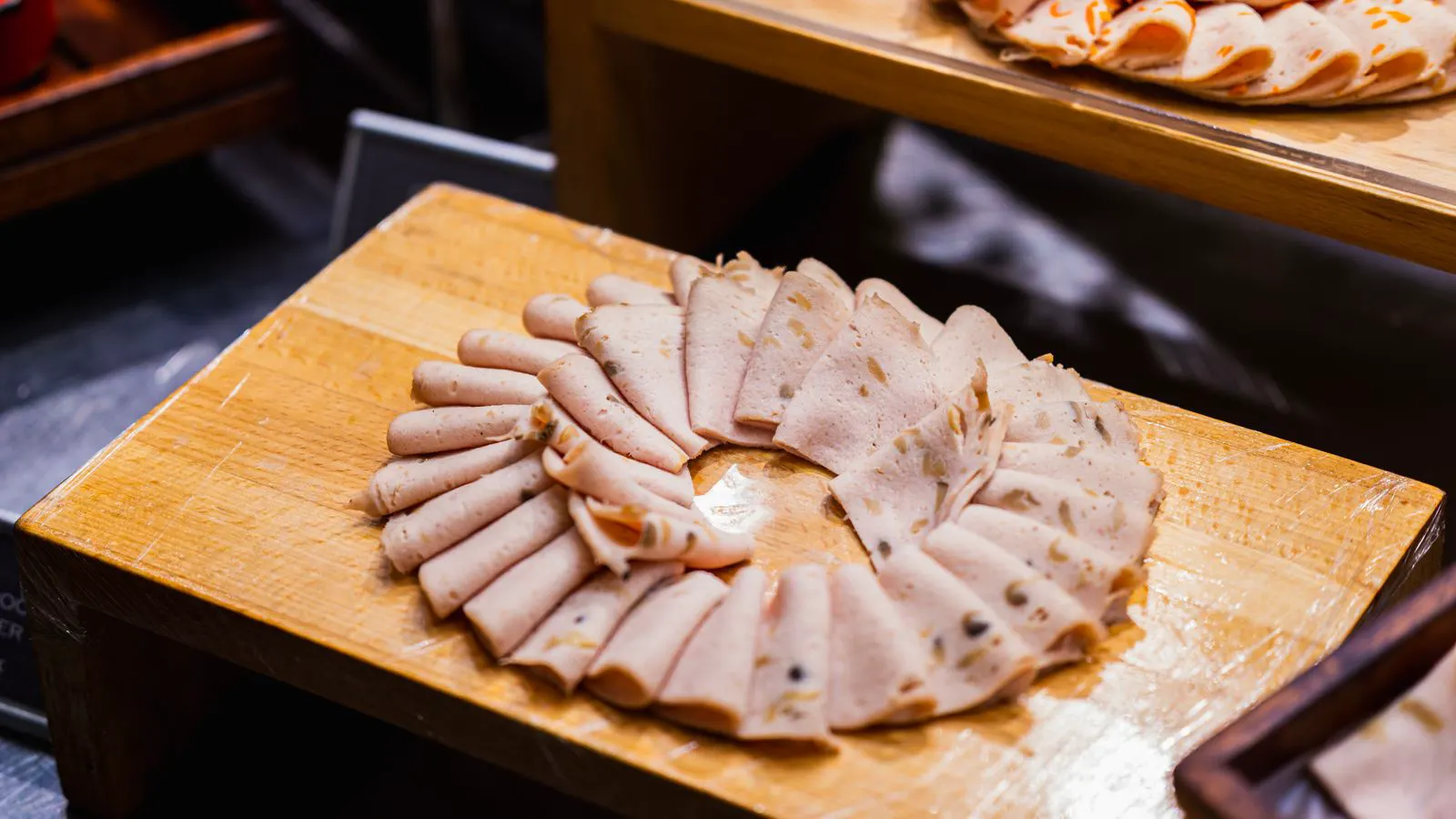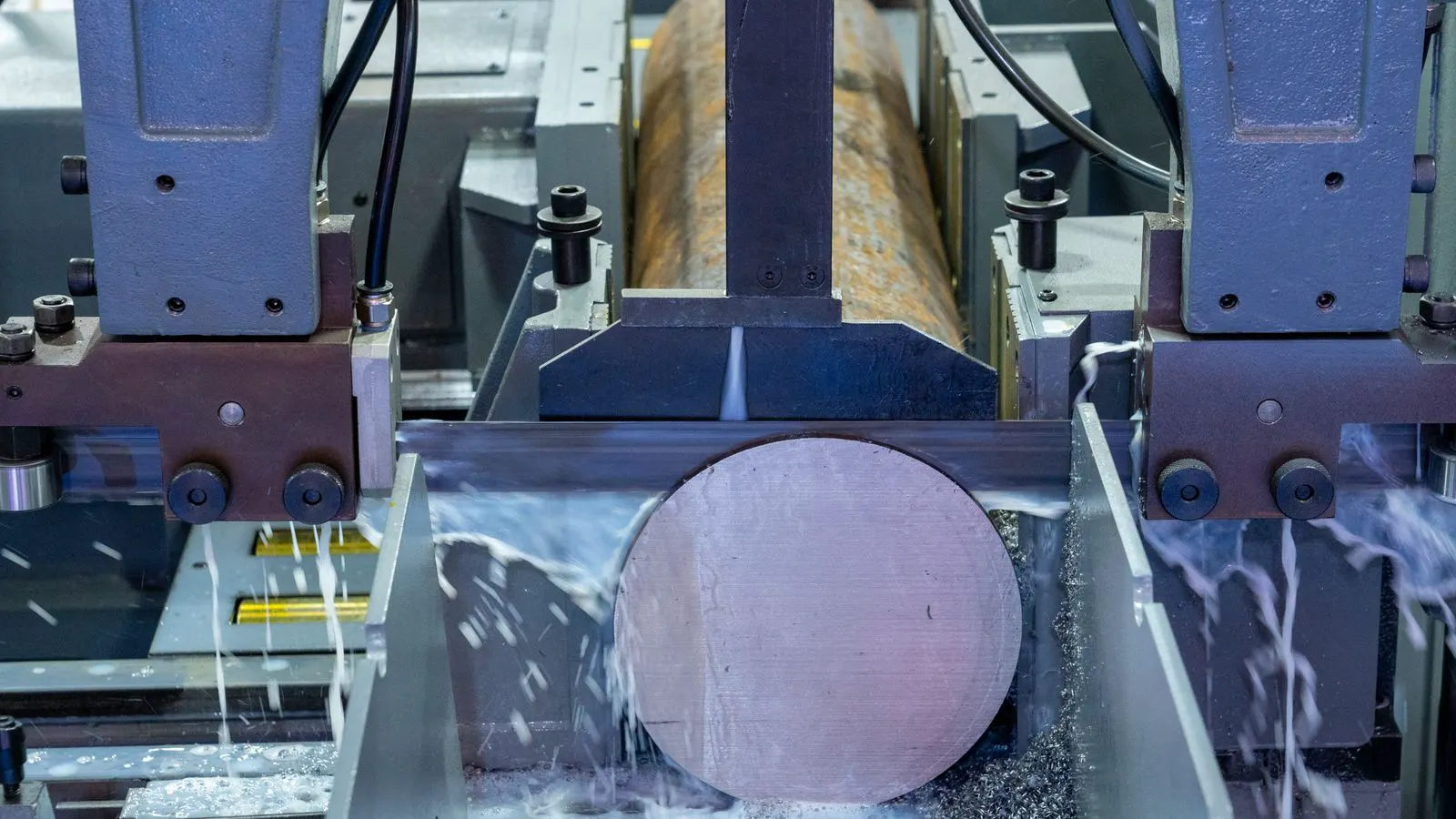
A guillotine slicer delivers straight, clean cuts on solid items. A band slicer handles irregular shapes and high-volume continuous processing. Choose based on product geometry, throughput, and tolerance for waste.
- Guillotine slicers excel on uniform, rigid products where a single clean cut defines the portion.
- Band slicers suit irregular or soft products needing continuous feed and high throughput.
- Blade geometry and carriage design determine surface quality and trim waste.
- Match the machine to the product shape before considering speed or budget.
- Regular blade inspection prevents quality drift and protects downstream packaging.
Core differences in cut structure
A guillotine slicer cuts by dropping a fixed blade through a product held in a carriage. The blade travels a short distance and retracts. This design produces a clean, flat cut face. The product does not move during the cut. The operator positions the item, presses a switch, and receives one slice.
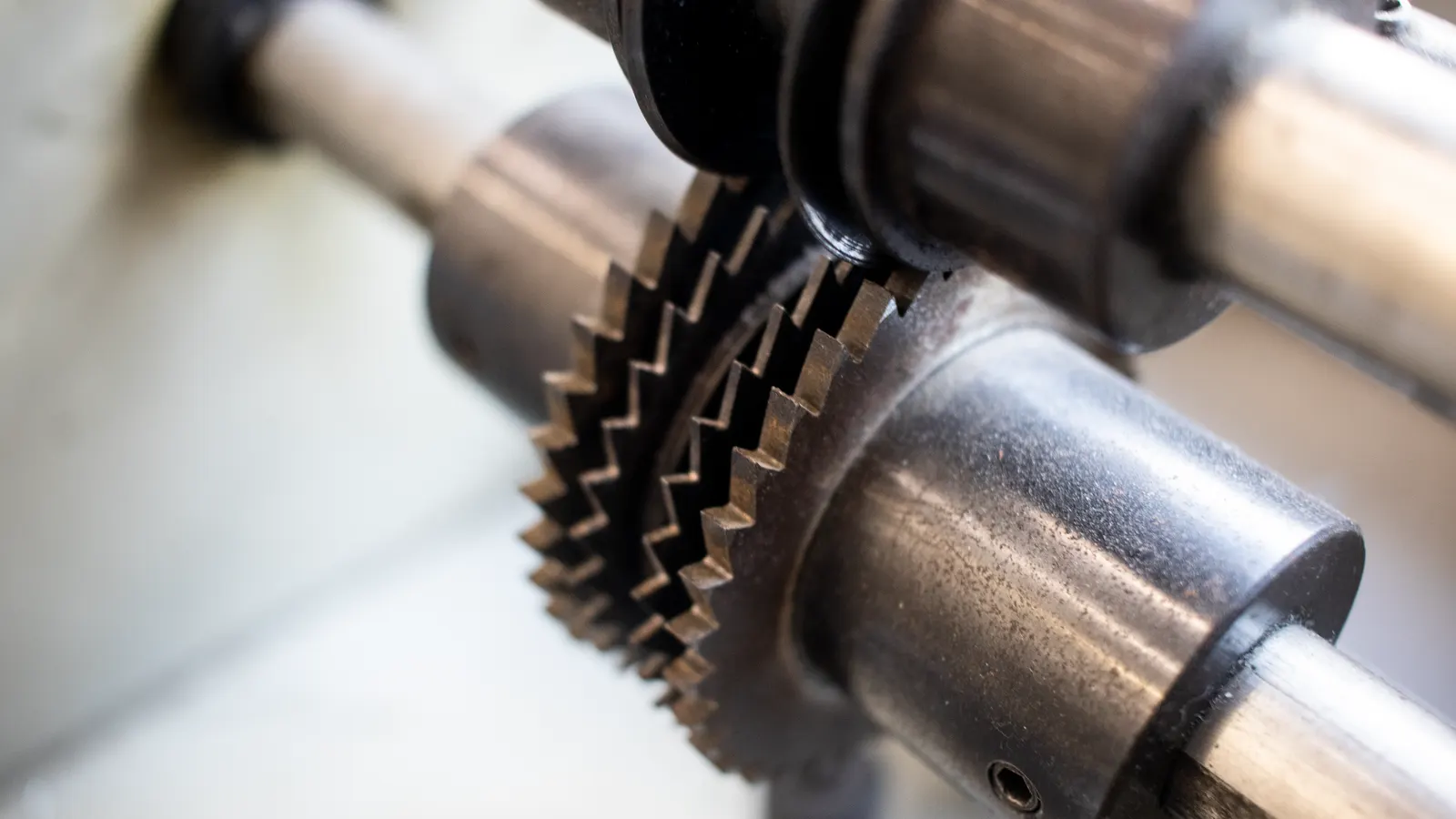
A band slicer uses two or more rotating wheels. The product sits on a conveyor or in a feed tray. The wheels pinch and pull the item through the cut. The cut happens while the product moves. This creates a continuous action. The cut face is often smoother for irregular items because the product is supported on both sides of the blade gap.
The fundamental difference is static versus dynamic cutting. A guillotine slicer stops, cuts, and resets. A band slicer keeps the product moving while it slices. That difference drives almost every other comparison point.
How each machine handles product shape
Uniform products favor the guillotine slicer. A block of cheese, a loaf of bread, or a vacuum-packed meat roll presents a flat face. The carriage holds the item steady. The blade drops straight down. The result is a flat, even slice.
Irregular products favor the band slicer. A whole chicken breast, a tapered fish fillet, or a soft cheese log resists a single fixed cut. The band slicer guides the product through. The wheels follow the contour. The cut follows the shape. This reduces the chance of tearing or crushing.
Soft products present a challenge for both. A guillotine slicer needs a firm support surface. The carriage must hold the item without compressing it. A band slicer can handle soft items better, but the wheels must be tuned for pressure. Too much pinch force crushes the product. Too little causes slipping.
Throughput and cycle time
A guillotine slicer has a fixed cycle time. The operator loads the product. The blade cuts. The operator removes the slice or advances the product. Each cut requires a manual or semi-automatic action. Speed depends on the operator and the product size.
A band slicer runs continuously. The product feeds through at a set speed. The wheels cut as the item passes. One operator can manage multiple items at once. The cycle time is governed by the conveyor speed and the wheel diameter.
High-volume tasks favor the band slicer. If a line processes hundreds of small items per hour, the continuous action wins. A guillotine slicer suits lower-volume, higher-value cuts where precision matters more than speed.
Blade geometry and surface quality
The blade in a guillotine slicer is long and fixed. It drops through the product. The cutting edge must stay sharp across its full length. Dull edges crush the product surface. This creates ragged edges and visible bruising.
The band slicer uses a continuous loop of cutting wheels. The wheels spin in opposite directions. The gap between them is the cut width. The surface quality depends on wheel sharpness and alignment. A misaligned wheel creates a bevel. A dull wheel creates heat damage.
For thin slices, the guillotine slicer can produce a very clean face. The blade contacts the product once. There is no dragging. For thicker slices, the band slicer can maintain consistent thickness because the wheels set the gap.
Waste and trim
Both machines create trim. The difference is where and how much.
A guillotine slicer creates trim on the cut face. If the product is not held perfectly flat, the edges show uneven thickness. The operator trims the edges by hand or with a separate cutter. This adds labor.
A band slicer creates trim at the ends of the product. The wheels cut the item as it enters and exits. The trim is usually smaller. The cut follows the product contour, so less material is lost at the edges.
For products with high value per unit, trim loss matters. A guillotine slicer may waste more on irregular items. A band slicer may waste less on uniform items if the feed is steady.
Cost and maintenance
A guillotine slicer is simpler in design. Fewer moving parts. The blade is a single long edge. Maintenance focuses on blade sharpening and carriage alignment. The blade is replaced or resharpened on a schedule.
A band slicer has more moving parts. The wheels spin. The conveyor moves. The tension system keeps the band tight. Maintenance includes wheel alignment, belt tension, and guard inspection. The cutting edges are shorter segments of a continuous band. They wear differently than a fixed blade.
The band slicer generally costs more to buy and maintain. The guillotine slicer is simpler to repair. If a blade breaks, the replacement is straightforward. If a band wheel cracks, the whole loop may need attention.
Application fit by product type
| Option | Best for | Limitations |
|---|---|---|
| Guillotine slicer | Uniform blocks, cheese, bread, meat rolls | Struggles with irregular or soft shapes |
| Band slicer | Chicken, fish, soft cheese, high-volume lines | More complex maintenance and setup |
| Manual guillotine | Low volume, high precision cuts | Slow for large batches |
| Automatic guillotine | Medium volume, consistent sizing | Higher initial cost than manual |
| Continuous band | High throughput, irregular products | Requires steady product feed |
When to pick each option
Choose a guillotine slicer when the product is uniform and the cut face matters. A cheese block needs a flat face for clean packaging. A bread loaf needs a straight slice for even thickness. A meat roll needs a clean cut for presentation. The operator values precision over speed.
Choose a band slicer when the product is irregular or the line runs at high speed. A fish fillet tapers along its length. A chicken breast has curves. A soft cheese log may shift. The band slicer handles these shapes without crushing. The line needs to process many items per hour.
Consider a manual guillotine slicer for small batches. The operator has time to position each item carefully. The cut quality is high. The speed is low. This fits specialty shops or small production runs.
Consider an automatic guillotine slicer for medium volume. The machine advances the product automatically. The operator loads and unloads. The cycle is faster than manual but slower than a band slicer. This fits lines that need consistency but not maximum speed.
Consider a continuous band slicer for high throughput. The product moves continuously. The operator monitors the line. The machine handles large volumes. This fits large processing plants or fast-moving consumer goods lines.
Final selection criteria
Start with the product shape. If it is uniform, the guillotine slicer is the natural fit. If it is irregular, the band slicer handles it better.
Next, look at the required slice thickness. Very thin slices favor a guillotine slicer because the fixed blade creates a clean face. Thicker slices can be handled by either, but the band slicer sets thickness by wheel gap.
Then, consider the throughput. If the line needs high speed, the band slicer wins. If the line values precision over speed, the guillotine slicer wins.
Finally, check the maintenance budget. A guillotine slicer is simpler to maintain. A band slicer requires more attention to wheels, tension, and guards.
The right choice depends on the product, the volume, and the quality target. Match the machine to the task. Do not force a uniform product through a band slicer when a guillotine slicer will give a cleaner cut. Do not force an irregular product through a guillotine slicer when a band slicer will handle the shape without damage.
Practical checks before buying
Before ordering any cutting machine, test the product on the unit. Bring samples of the thinnest and thickest items. Run them through both the guillotine and band slicer. Check the cut face. Measure the thickness. Look for bruising, tearing, or uneven edges.
Inspect the blade alignment. A guillotine slicer needs a straight blade path. A band slicer needs even wheel gaps. Misalignment creates beveled cuts and inconsistent thickness.
Check the carriage or conveyor. A guillotine slicer needs a smooth carriage that holds the product flat. A band slicer needs a steady conveyor that feeds without jerking.
Review the blade replacement process. A guillotine slicer uses a long blade. A band slicer uses a continuous loop. Ask how often blades are replaced and what tools are needed.
Look at the guards and safety features. Both machines have sharp edges. The guards must be easy to open and close. The emergency stop must be reachable. The design should prevent hand contact during the cut.
Test the machine at the target speed. Run the line at the planned throughput. Check if the cut quality holds. Check if the product moves smoothly. Check if the trim is acceptable.
Related considerations
Blade alignment directly affects cut quality. A slight tilt creates a bevel. A dull edge crushes the surface. Keep blades sharp and aligned.
Product debris can clog the feed area. A guillotine slicer needs a clean carriage. A band slicer needs a clear conveyor. Regular cleaning prevents jams and quality issues.
High-speed slicing lines require careful setup. The feed speed must match the cut speed. The product must be positioned correctly before the cut.
Blade sharpening requires care. A sharp blade cuts cleanly. A dull blade damages the product. Follow the manufacturer’s sharpening schedule.
These factors influence the choice between a guillotine slicer and a band slicer. They also affect the performance of either machine after purchase.
Frequently asked questions
Can a guillotine slicer handle soft cheese?
It can, if the cheese is firm enough to hold in the carriage. Very soft cheese may compress or shift during the cut, causing uneven thickness.
Which machine creates less trim?
The band slicer typically creates less trim on irregular products because the cut follows the shape. The guillotine slicer creates more trim on non-flat items.
How often should slicer blades be checked?
Check blade alignment and sharpness after each production run or as specified by the manufacturer. Dull blades damage product surface quality.
Can a band slicer make very thin slices?
Yes, but the wheel gap must be set accurately. The continuous cut requires steady feed and sharp wheels to avoid tearing on thin slices.
Which machine is easier to clean?
A guillotine slicer is generally easier to clean because it has fewer moving parts. A band slicer requires cleaning the wheels, conveyor, and guards.