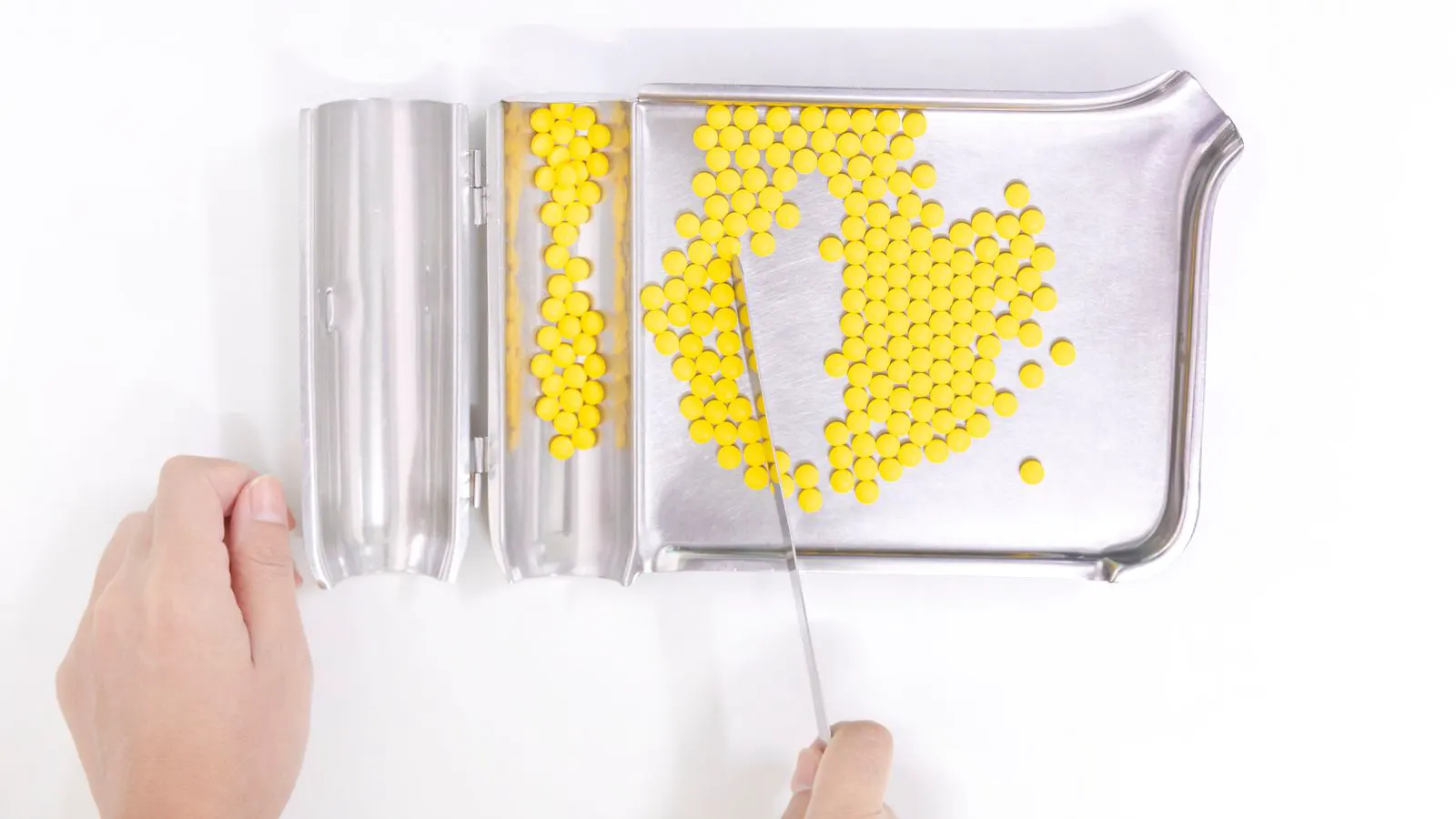
Batch consistency in food mixing fails when mechanical wear, inaccurate dosing, and poor process control alter the intended recipe and thermal profile. This article breaks down the mechanical and operational roots of variability to help buyers specify equipment with built-in repeatability.
- Batch consistency depends on stable mechanical torque, precise ingredient sequencing, and repeatable thermal profiles.
- Deteriorating seals, worn impellers, and inconsistent feed rates are primary mechanical causes of batch variation.
- Process control systems must log and verify every step, not just run the recipe blindly.
- Sourcing decisions should prioritize traceability, sensor integration, and serviceability over single-point performance.
- A worked example shows how a small change in mixing time and feed rate shifts the final texture.
Why the Same Recipe Produces Different Batches
A plant can run the same recipe on consecutive shifts and still receive customer complaints about texture, color, or flavor. The recipe sheet remains unchanged. The operator follows the written steps. Yet the batch leaves the line with a different mouthfeel or a slightly off hue. This is not a mystery. It is a systems failure.
Batch consistency means every unit of product leaves the process with the same physical and chemical properties. In industrial mixing, that consistency depends on three linked factors: the mechanical action inside the vessel, the timing and rate of ingredient addition, and the thermal history of the mass. When any one of those factors drifts, the final product drifts with it.
The failure usually does not originate in the recipe. It originates in the equipment and the control logic that executes the recipe. Understanding where those failures happen is the first step in selecting food mixing equipment that will hold performance over time.
What Fails First: Mechanical Wear and Material Contact
The mixing system is a mechanical system. Every moving part wears. Every surface contacts food. Over time, those surfaces and parts change.
The impeller is the most obvious example. A paddle or anchor impeller transfers energy to the product. Its shape determines how the mass circulates. If the edges wear down, the flow pattern changes. The mass may not fold over the same way. The center of the vessel may mix at a different rate than the outer zone. The recipe was written for a specific impeller profile. A worn impeller no longer delivers that profile.
Seals and bearings fail in a similar way. A worn shaft seal allows small amounts of water or product to migrate into areas that should be dry. A bearing with increased play changes the rotational speed slightly under load. The motor may still run at the same voltage, but the impeller may turn at a slightly different angular velocity because of mechanical drag. That small change in speed changes the shear rate. The shear rate changes the way starch granules gel or the way fat crystals form. The end product changes.
The vessel itself matters. A thick stainless steel wall conducts heat differently than a thin one. If the vessel wall develops pitting or corrosion, the surface area for heat transfer changes. A small change in surface area can alter the rate of heat absorption or release. That change ripples through the cooking or holding steps.
Buyers often focus on the motor rating or the vessel volume. Those are correct, but they are only the starting point. The sourcing decision must also account for the expected wear life of the impeller, the type of seals, the bearing arrangement, and the material compatibility of every surface that touches the product. A vendor who cannot specify those details in writing is not providing a complete picture of the equipment.
How Ingredient Sequencing and Feed Rates Shift the Batch
The recipe lists ingredients. It does not always list the exact rate at which each ingredient enters the vessel. In practice, the feed rate is a control variable. If the sugar is added too slowly, the concentration gradient at the impeller tip changes. If the liquid is added too fast, the mass becomes localized and the impeller struggles to homogenize.
Food mixing equipment must deliver ingredients at the specified rate. That requires precise dosing. A gravity feed with a manual valve is not precise. A pneumatic valve with a controller is better. A metering pump with flow sensors is better still. The level of precision depends on the sensitivity of the recipe to concentration and temperature.
The sequence matters as much as the rate. Adding a cold ingredient to a hot mass lowers the temperature of the whole batch. That lower temperature may slow a reaction that was supposed to proceed at a higher temperature. The operator may not see the temperature drop if the sensor is not positioned correctly or if the response is slow. The batch continues to cook at a lower effective temperature. The final product is undercooked or has a different gel structure.
A worked example helps show this. Imagine a sauce recipe that calls for a starch slurry to be added at a specific temperature. The slurry is pumped into the vessel. If the pump flow rate is 10 percent higher than intended, the starch enters faster than the system can disperse it. The local concentration becomes too high. The starch clumps. The clumps do not dissolve fully. The finished sauce has a grainy texture. The operator sees a normal-looking batch. The customer sees the graininess. The recipe was correct. The feed rate was not.
This is where process control becomes part of the mixing system, not just an afterthought. The control system must monitor flow, temperature, and torque at the same time. It must be able to stop or adjust the feed if a parameter leaves the acceptable range. Without that capability, the batch continues to process in a degraded state.
Process Control Gaps That Hide the Failure
A control system that only records the end result is not a control system. It is a logger. Batch consistency requires the system to verify each step as it happens.
The typical gap is a lack of closed-loop control. The recipe says “heat to 90 degrees for ten minutes.” The system reaches 90 degrees. It waits ten minutes. It stops. That is not enough. The system should verify that the heating rate was within a defined range. It should verify that the temperature did not spike or dip during the ten minutes. It should verify that the mixing speed remained at the set value. If any of those parameters drifted, the batch should be flagged.
Sensor placement is another common gap. A temperature sensor mounted on the vessel wall reads the wall temperature, not the product temperature. A sensor near the impeller tip reads the local temperature, not the average. If the sensor is in the wrong place, the control system makes decisions based on false data. The batch is cooked according to a temperature that was never present in the mass.
The control logic must also account for the thermal mass of the vessel. A large vessel with a heavy lid takes longer to heat than a small vessel. If the system uses the same recipe for both without adjusting the heat profile, the batches will differ. The process control system should be able to recognize the vessel size and the load mass and adjust the heating curve accordingly.
Buyers should ask for the control architecture in writing. What sensors are installed? Where are they located? What does the system do when a parameter leaves the acceptable range? What data is logged? Is the data stored in a way that can be retrieved for a specific batch? These questions determine whether the equipment will produce consistent batches or simply produce batches that look consistent on paper.
How Vessel Geometry and Impeller Type Affect Repeatability
Two vessels of the same volume can mix the same product in different ways. The shape of the vessel changes the flow pattern. The type of impeller changes the shear rate. The ratio of the impeller diameter to the vessel diameter changes the mixing efficiency.
A cylindrical vessel with a flat bottom has different flow characteristics than a conical bottom. The conical bottom guides the mass toward the center, which can improve mixing for dense products. A flat bottom can create dead zones near the wall. If the impeller does not reach those zones, the product in the dead zones mixes less. The final batch is not homogeneous.
The impeller type must match the product. A high-shear impeller is designed for emulsions and suspensions. A low-shear paddle is designed for batters and doughs. Using the wrong impeller changes the shear environment. The product responds to the shear environment. If the shear is too high, the structure breaks down. If the shear is too low, the components do not combine. The recipe was written for a specific shear profile. The wrong impeller changes that profile.
This is why the mixing and cooking checklist must include the vessel geometry and the impeller specification. The checklist should also include the expected viscosity range of the product. A product that starts thin and becomes thick will require a different impeller or a variable speed drive. A fixed-speed system may work for the thin stage and fail for the thick stage.
Buyers should request a process design document that shows the expected flow pattern for the intended product. The document should identify the shear zones and the dead zones. It should explain how the impeller and vessel work together to minimize those dead zones. Without that document, the buyer is relying on a vendor’s general claim.
How Cleaning and Sanitization Create Batch-to-Batch Variation
A batch that is not cleaned properly from the previous run can change the chemistry of the next run. Residual product on the vessel wall, on the impeller, or on the seal can react with the new ingredients. That reaction changes the batch.
The cleaning process must be documented and verified. A rinse that is not hot enough leaves residue. A rinse that is not long enough leaves residue. A detergent that is incompatible with the product leaves residue. The cleaning program must be specific to the product that was just processed.
The sanitization step is equally important. A sanitizer that is not at the correct concentration does not kill the microbes. A sanitizer that is not in contact long enough does not kill the microbes. The batch that follows may have a different microbial load. That load can affect the flavor and the shelf life.
The process control system should integrate the cleaning cycle. It should verify the rinse temperature, the rinse time, and the sanitizer concentration. It should log the cycle. It should not allow the next batch to start until the cleaning cycle is complete and verified. Without that integration, the cleaning step is a separate event that can be skipped or shortened under production pressure.
This is a sourcing consideration. The equipment must be designed for easy cleaning. The vessel should have no dead legs. The impeller should be removable or have a design that allows full access. The seals should be replaceable without disassembling the entire drive. If the equipment is difficult to clean, the cleaning cycle will be inconsistent, and the batches will vary.
How Operator Variability and Training Gaps Introduce Noise
The most advanced control system cannot compensate for an operator who deviates from the procedure. The operator may open the valve too early. The operator may add an ingredient by hand because the feed pump is slow. The operator may adjust the heat setting based on a guess rather than a sensor reading.
Training is not a one-time event. It must be ongoing. The operator must understand the purpose of each parameter. They must understand what happens when a parameter is out of range. They must understand how to respond to an alarm without breaking the batch.
The documentation must be clear. A recipe that says “mix until smooth” is not a control instruction. A recipe that says “mix at 150 rpm for three minutes, then verify the viscosity is between X and Y” is a control instruction. The recipe must be written in terms that the control system can verify.
The operator interface must be simple. If the operator has to navigate through three screens to start the batch, they are more likely to skip a step. The interface should present the current step, the target value, and the actual value in one view. It should highlight any deviation. It should require an acknowledgment before moving to the next step.
This is a human factors issue. The equipment must be designed to reduce the chance of error. The controls must be logical. The alarms must be meaningful. The documentation must be accessible. If the design forces the operator to make a judgment call, the batch is at risk.
Sourcing Decisions That Protect Batch Consistency
The sourcing decision is not just about buying a machine. It is about buying a system that can hold performance over time. The buyer must evaluate the mechanical components, the control system, the cleaning design, and the documentation.
The table below shows how each component affects batch consistency and what the buyer should request.
| System Component | How It Affects Batch Consistency | What to Request in the Sourcing Document |
|---|---|---|
| Impeller and Shaft | Worn or mismatched impellers change shear and flow | Impeller material, geometry, expected wear life, replacement interval |
| Vessel Geometry | Shape affects dead zones and heat transfer | Vessel drawing, material thickness, surface finish, heat transfer area |
| Dosing System | Feed rate and sequence alter concentration | Dosing method, flow sensors, valve type, flow rate range, sequence logic |
| Process Control | Verifies each step and logs data | Control architecture, sensor locations, alarm logic, data logging format |
| Cleaning Design | Residuals change the next batch | Cleaning procedure, rinse temperatures, sanitizer integration, access points |
| Operator Interface | Reduces human error | Interface layout, step verification, alarm presentation, training documentation |
The buyer should treat these items as non-negotiable. A vendor who cannot provide the impeller wear life or the sensor locations is not providing a complete system. The vendor should be able to show how each component contributes to batch consistency.
The documentation must be specific. It should not say “high quality materials.” It should say “316L stainless steel, 3 mm wall thickness, 2 Ra surface finish.” It should not say “advanced control.” It should say “PLC with 16 temperature sensors, 8 flow meters, and a data historian that stores batch records for 10 years.”
The vendor should also provide a validation plan. The plan should show how the equipment will be verified after installation. It should include a test batch that measures the key parameters and compares them to the target range. It should include a cleaning verification that shows no residual product. It should include a control test that shows the system responds to an out-of-range condition.
Without that validation, the buyer is trusting a claim. With it, the buyer is verifying a specification.
Final Considerations for a Durable Mix
Batch consistency is not a single point of failure. It is a chain. The impeller must hold its shape. The feed system must deliver the right rate. The sensor must read the true value. The control must act on that value. The cleaning must remove the residue. The operator must follow the procedure. If any link weakens, the batch drifts.
The goal is to build a system where each link is designed, installed, and maintained to hold its function. That requires a sourcing process that goes beyond the price tag and the brochure. It requires a process that asks for the details, verifies the design, and tests the performance.
When the details are in place, the batch leaves the vessel with the same properties every time. The customer does not see the variation. The plant does not have to chase the problem. The equipment does its job.
Frequently asked questions
What is the most common cause of batch inconsistency in industrial mixing?
Mechanical wear of the impeller and seals changes the flow pattern and shear rate, which alters the product structure. This is often followed by feed rate variation and sensor placement errors.
How do I verify that my feed system is precise enough for my recipe?
Run a test batch with a calibrated flow meter and compare the actual feed rate to the set value. If the difference exceeds your recipe tolerance, the feed system is not precise enough for that product.
Can a control system correct for mechanical wear automatically?
No. A control system can detect a deviation and alarm, but it cannot repair a worn impeller or a leaking seal. It can only tell you when the mechanical component has drifted out of specification.
What documentation should I request before purchasing food mixing equipment?
Request the vessel drawing, impeller specification, dosing method, sensor locations, control architecture, cleaning procedure, and a validation plan that shows how each parameter will be tested after installation.
How often should I inspect the impeller and seals?
Inspect them according to the expected wear life for your product and your production cycle. A dense product will wear parts faster than a thin liquid. Inspect after every changeover to a new product family and after any batch that deviated from the target range.