This checklist helps engineers evaluate cooking pot design by focusing on heat transfer efficiency, material selection, and geometry. It provides specific parameters to audit vessels for reliable thermal processing and batch consistency in food production.
- Cooking pot design directly impacts heat transfer rates and the final consistency of the thermal processing batch.
- Material selection and surface finish are critical for preventing product scorching and ensuring easy cleaning.
- Geometric features like wall thickness and jacket area must be evaluated to guarantee uniform heating.
- Consistent batch performance requires auditing the interaction between the pot, the heating medium, and the product viscosity.
Why Cooking Pot Design Matters for Thermal Processing
Cooking pot design is the foundation of reliable thermal processing in food manufacturing. When a vessel fails to transfer heat evenly, it leads to inconsistent product quality, higher energy costs, and potential safety risks. Engineers must treat the pot not just as a container, but as a heat exchanger with specific mechanical and thermal duties.
Heat Transfer Surface Area and Wall Geometry
The most common failure point in thermal processing is uneven heat distribution. A pot with a thin, flat bottom may scorch the product while the top remains undercooked. The design must ensure that the heating surface is in intimate contact with the food.
- Jacket Coverage: Evaluate the ratio of heating jacket area to pot volume. For viscous products, a larger jacket area relative to volume is often necessary to maintain temperature.
- Wall Thickness: Check the thickness of the bottom and side walls. Walls that are too thick act as thermal barriers, reducing heat transfer efficiency. Walls that are too thin may warp under thermal stress.
- Bottom Geometry: A flat bottom is standard, but slightly concave or angled designs can improve agitation patterns. Avoid deep recesses where heat can pool or product can stagnate.
Material Selection and Surface Finish
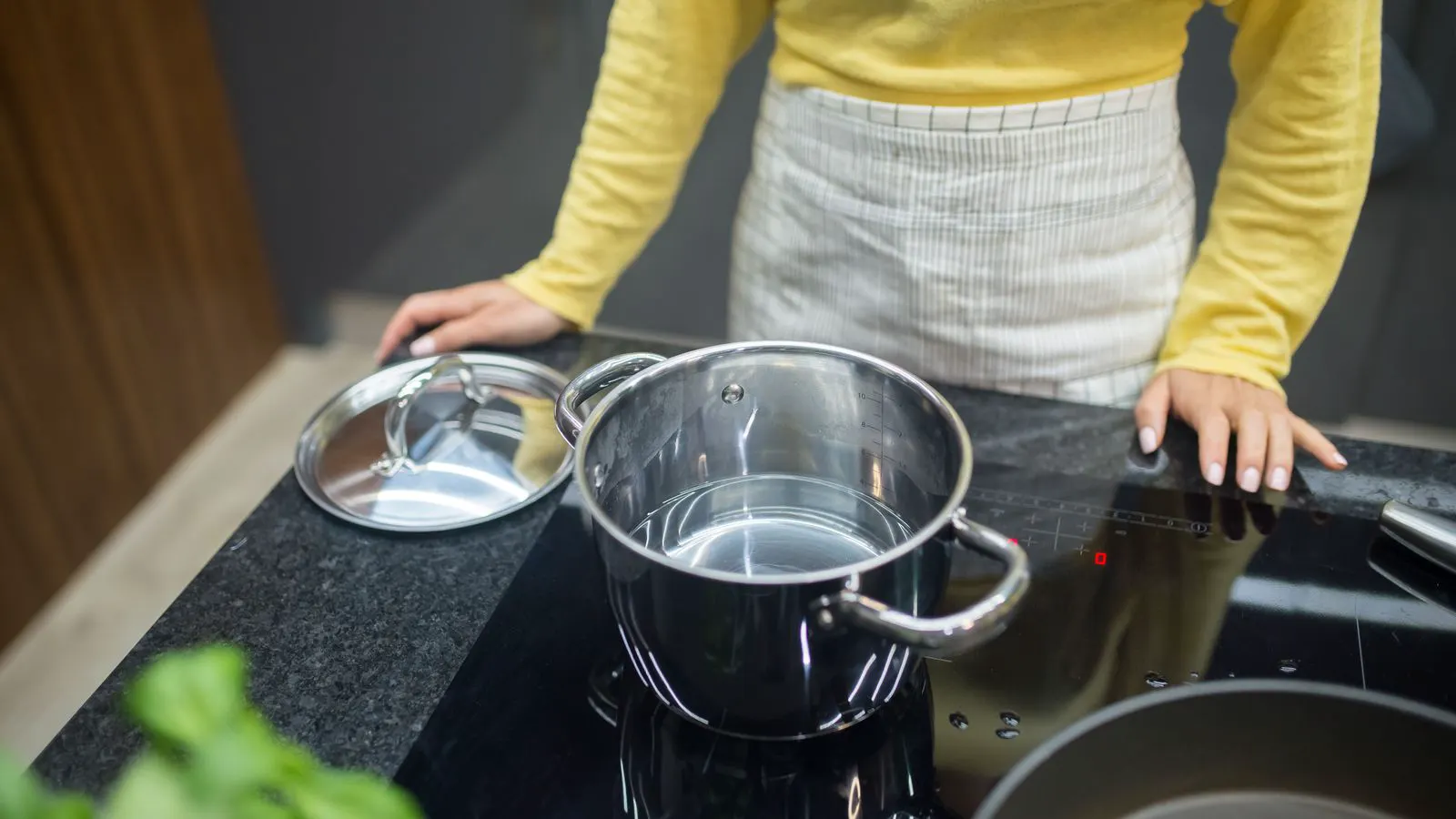
The material of the cooking pot determines both the rate of heat transfer and the interaction with the food product. Stainless steel is the industry standard due to its corrosion resistance and ease of cleaning. However, the specific alloy and surface finish significantly affect performance.
- Alloy Grade: Ensure the pot is made from food-grade stainless steel suitable for the product’s acidity. Lower-grade alloys may corrode, leading to metal contamination.
- Surface Roughness: A polished or passivated surface reduces friction and prevents product sticking. Rough surfaces trap food particles, leading to inconsistent cleaning and potential bacterial growth.
- Thermal Conductivity: While stainless steel has lower thermal conductivity than copper or aluminum, it is generally sufficient. If higher conductivity is needed, consider copper-lined bottoms or specialized alloys.
Agitation and Fluid Dynamics
A cooking pot does not operate in a vacuum; it must work in tandem with a mixer or agitator. The design of the pot must accommodate the mixing pattern to ensure that no dead zones remain where the product does not circulate.
| Design Element | Recommended Characteristic | Risk if Neglected |
|---|---|---|
| Agitator Clearance | 50-100mm from wall | Product accumulation in dead zones |
| Inlet/Outlet Placement | Opposite sides, low level | Poor mixing and uneven discharge |
| Pot Shape | Cylindrical, vertical axis | Turbulent flow for better mixing |
| Bottom Design | Smooth, no sharp corners | Vortex formation and scorching |
- Vortex Prevention: Ensure the pot diameter and agitator size are balanced to prevent large vortices. Vortices create low-pressure zones that can draw in air and cause inconsistent heating.
- Scraping Action: If the process requires scraping, the pot wall should allow for a scraper to move freely. If a scraper is not used, the pot geometry must rely on the agitator to keep the bottom clear.
- Discharge Flow: The outlet location should be at the lowest point to ensure a complete batch discharge. A poorly placed outlet can leave a “cake” of product behind, which affects the next batch consistency.
Thermal Management and Insulation
Heat is a resource that must be controlled. A cooking pot that loses too much heat will require more energy to maintain the target temperature, while a pot that retains too much heat can cause overheating. Insulation and lid design are critical components of the overall cooking pot design.
- Insulation Layer: Check for the presence of insulation on the outer shell. This reduces heat loss to the environment and improves energy efficiency.
- Lid Seal: A good lid prevents heat loss and condensation buildup. A loose lid can cause significant temperature fluctuations during the cooking cycle.
- Thermocouple Placement: Ensure that the temperature sensors are placed in locations that accurately reflect the bulk product temperature, not just the pot wall temperature.
Cleaning and Sanitation Compatibility
A cooking pot that is difficult to clean is a liability. The design must be compatible with the cleaning-in-place (CIP) system used in the facility.
- Dead Zones: Look for any crevices, welds, or recesses where product can accumulate. These areas are prone to biofilm formation and are difficult to sanitize.
- Weld Quality: All internal welds should be ground smooth. Sharp weld beads create traps for food particles and bacteria.
- Removable Components: Check if the pot has removable parts, such as a bottom plate or agitator shaft, that can be taken out for thorough cleaning.
Batch Consistency and Process Validation
The ultimate test of a cooking pot design is its ability to produce consistent batches. Engineers should audit the vessel against its intended process parameters.
- Temperature Uniformity: Use thermocouples at different heights and radii to verify that the pot maintains a uniform temperature profile.
- Viscosity Impact: If the product viscosity changes during cooking (e.g., starch gelatinization), ensure the pot design and agitation speed are adjusted accordingly.
- Scale Factor: If moving from a pilot pot to a production pot, ensure that the surface-to-volume ratio is maintained. A larger pot does not automatically scale heat transfer linearly.
Red Flags in Cooking Pot Design
When auditing a cooking pot, look for these specific red flags that indicate poor design:
- Uneven Heat Distribution: If the bottom is significantly hotter than the sides, the design is flawed.
- Excessive Wall Thickness: Walls thicker than necessary increase thermal resistance and slow down the process.
- Poor Agitator Fit: An agitator that is too small or too large for the pot size will create inefficient mixing.
- Lack of Insulation: In a cold environment, a pot without insulation will waste energy and struggle to maintain temperature.
- Difficult-to-Clean Geometry: Any internal feature that cannot be easily scrubbed or rinsed is a sanitation risk.
By systematically reviewing these parameters, engineers can ensure that the cooking pot design supports efficient thermal processing and delivers consistent batch quality. This audit approach helps identify potential issues before the equipment is installed, saving time and reducing operational risks.
Frequently asked questions
How does the shape of the cooking pot affect heat transfer?
The shape influences fluid dynamics and surface area. A cylindrical pot with a flat bottom generally provides better heat distribution than a spherical or conical pot, especially when combined with proper agitation.
What is the ideal wall thickness for a cooking pot?
There is no single ideal thickness, but it must be thick enough to withstand thermal stress and mechanical loads while being thin enough to allow efficient heat transfer. Typically, 2-5mm of stainless steel is common for medium-sized pots.
Can a cooking pot be used for both high and low viscosity products?
Yes, but the agitation system and jacket design must be flexible enough to handle the change in viscosity. High viscosity products require more jacket area and slower agitation to avoid scorching.
How important is the surface finish of the pot?
It is critical. A rough surface can trap food particles, leading to inconsistent cleaning and potential contamination. A smooth, polished finish ensures easy cleaning and better heat transfer.
Does the cooking pot material affect the final food quality?
Yes. The material can affect the rate of heat transfer and may interact with the food if it is not food-grade. Stainless steel is preferred for its inertness and durability.