A frozen meat slicer requires specific blade hardness, low-friction drives, and easy-clean design. This guide evaluates key specifications to match equipment to frozen product thickness and production volume.
- Match blade diameter to product thickness to prevent drag and uneven cuts.
- Verify CIP access and drain points to meet hygiene standards for frozen lines.
- Choose drive systems that maintain torque under high-friction frozen loads.
- Evaluate blade material and hardness for consistent performance on frozen cuts.
- Test slice thickness consistency under production-speed loads before final purchase.
Why Frozen Meat Slicing Differs from Fresh Product Processing
Processing frozen meat products places different demands on a slicer than fresh deli work. The product is harder, colder, and often coated with ice or moisture. A slicer that performs well on a thawed roast will struggle on a frozen block if the design does not account for increased resistance.
The main variables are blade interaction, drive torque, and cleaning access. A frozen meat slicer must maintain steady pressure on the product without crushing the meat or causing the blade to skip. The blade system must withstand impact loads from ice crystals. The drive must deliver consistent torque even when the product resists movement.
Most facilities process frozen meat in two ways. One is slicing frozen slabs for retail or portioning. The other is slicing frozen products after partial thawing or under controlled humidity. Each method changes the required specifications. A buyer should identify the exact product state before evaluating equipment.
Blade Systems for High-Resistance Frozen Loads
The blade is the first component to evaluate. A rotary slicer blade system uses a long, circular cutting edge with a counter-blade at the front. The counter-blade holds the product while the main blade rotates. For frozen meat, the blade diameter and edge geometry determine how the cut forms.
A larger blade diameter reduces the number of revolutions needed to cut a thick frozen block. This lowers wear on the motor and improves slice uniformity. A smaller blade is better for thin, high-volume cuts where speed matters more than torque. The blade material is usually high-carbon stainless steel. For frozen work, the edge must be hardened to resist chipping from ice.
The counter-blade design also affects frozen processing. A fixed counter-blade is simpler but may not hold irregular frozen shapes well. An adjustable or spring-loaded counter-blade can accommodate varying product dimensions. If the product is heavily iced, the counter-blade must be positioned to prevent the blade from hitting the ice before the meat.
The angle of the blade edge matters. A sharper edge cuts cleaner but dulls faster on hard frozen loads. A slightly blunter edge lasts longer but can crush the meat. The buyer should ask for a sample cut test using the exact frozen product. The edge finish and material hardness should be checked after a short trial run.
Drive Torque and Motor Selection
The drive system must handle the higher resistance of frozen food. A frozen meat slicer requires more torque than a standard deli slicer. The motor must maintain speed when the blade meets a dense frozen block.
A common failure is a drive that slows or stalls under load. This causes uneven slices and inconsistent thickness. The motor should have a rated torque curve that covers the expected product dimensions. A larger motor with a lower speed rating often performs better than a smaller high-speed motor.
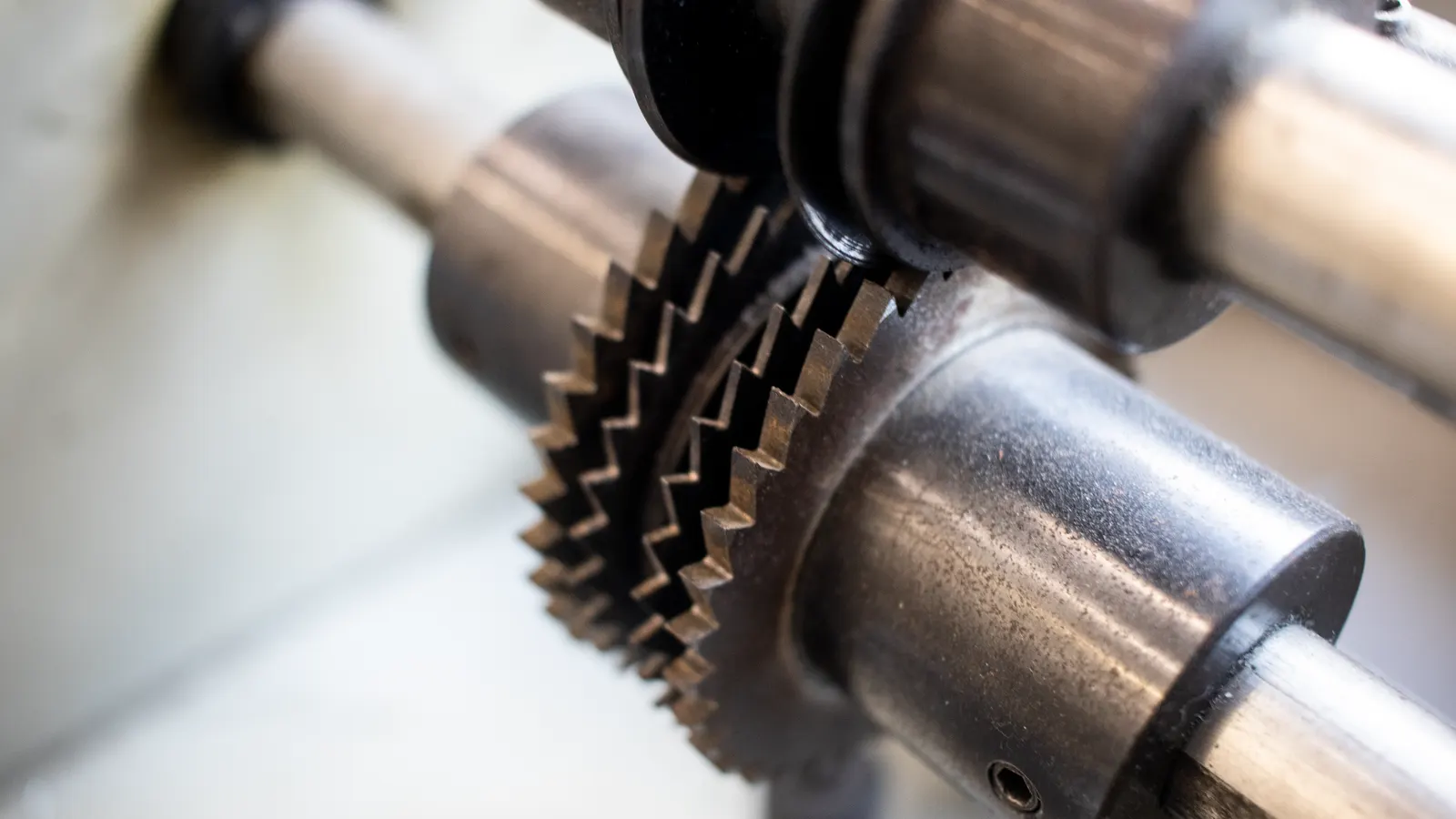
The transmission type also affects performance. A belt drive can slip under high torque. A gear drive with proper backlash control provides steadier motion. A direct drive can reduce maintenance but may be harder to adjust for different slice thicknesses. The buyer should ask about the transmission ratio and whether the drive can handle the maximum product width and thickness.
The control system should include a load monitor or overload protection. If the frozen product is too thick, the drive may trip. A soft-start feature reduces shock to the mechanism when starting with a frozen block in the carriage.
Sizing and Carriage Capacity
Carriage capacity determines the maximum product width and thickness that can be processed. A frozen meat slicer must handle the full size of the frozen block, not just the final portion. The carriage bed must be wide enough to support the product during the cut.
The product thickness is measured from the blade edge to the back of the carriage. For frozen meat, the thickness setting must allow for the full frozen dimension. If the product is slightly thicker than the rated capacity, the blade may not fully clear the meat, causing a partial cut or jam.
The carriage material should be non-porous and easy to clean. Stainless steel is standard. The carriage should have a slight slope or drain channel to direct melted product and ice water away from the blade assembly. A flat carriage without drainage can hold water and ice, which increases friction and affects slice quality.
The speed of the carriage movement should be adjustable. A slow carriage speed is better for thick frozen cuts. A faster speed works for thin frozen slices. The buyer should test the carriage at its fastest and slowest speeds with the frozen product to ensure the thickness gauge remains accurate.
Hygiene, CIP, and Cleaning Access
Frozen food processing requires strict hygiene controls. A frozen meat slicer must allow for thorough cleaning between product changes. The buyer should verify CIP access and drain points.
CIP access means the equipment can accept a cleaning solution without disassembly. The blade assembly, carriage, and housing should have ports for solution flow. The blade must be removable for manual cleaning and sharpening. The counter-blade and any product-contact surfaces should be accessible.
Drain points are critical. Frozen products release moisture as they thaw. This water mixes with meat residues and bacteria. Drain points should be located at the lowest points of the equipment. A CIP system without proper drainage will leave standing water, which creates a hygiene risk.
The buyer should ask for a cleaning diagram. The diagram should show where solution enters, where it exits, and where manual cleaning is required. The frequency of blade sharpening should be estimated based on the product type and volume. Frozen meat is hard on the edge, so sharpening intervals may be shorter than for fresh deli meat.
Matching Specifications to Product and Volume
The final step is matching the slicer to the specific product and production volume. The buyer should create a profile of the frozen meat being processed. The profile includes product name, frozen state, average thickness, width, and expected daily volume.
The product thickness determines the blade diameter and carriage capacity. The product width determines the carriage bed size. The daily volume determines the motor rating and transmission type. A high-volume operation may require a slicer with a faster carriage and a larger blade to maintain throughput.
The buyer should also consider the surrounding equipment. A frozen meat slicer often feeds into packaging or portioning machines. The slice thickness and shape must match the downstream process. If the slicer produces uneven slices, the packaging machine may reject product.
The test run should use the actual frozen product. The buyer should run the equipment for a period that simulates a production shift. The test should measure slice thickness, check for blade wear, and time the cleaning cycle. The results should be compared against the expected specifications.
Decision Checklist
Before selecting a frozen meat slicer, the buyer should confirm the following points.
- The blade diameter is matched to the maximum product thickness.
- The drive system has sufficient torque for frozen loads.
- The carriage capacity covers the product width and thickness.
- CIP access and drain points are verified on the equipment.
- The blade material and edge hardness are suitable for frozen processing.
- The control system includes overload protection and soft-start.
- A test run with the actual frozen product has been completed.
- The cleaning cycle is practical for the facility schedule.
- The spare parts and blade sharpening support are available.
- The equipment meets the facility hygiene and safety standards.
A frozen meat slicer is a specialized tool. The buyer should not select based on fresh product performance alone. The specifications must be checked against the frozen product state and the production volume. A well-matched slicer will deliver consistent slices, reduce blade wear, and support the hygiene requirements of frozen food processing.
Frequently asked questions
What blade diameter is best for frozen meat?
A larger blade diameter is generally better for thick frozen blocks because it reduces the number of revolutions needed. A smaller blade works for thin frozen slices where speed is the priority.
Can a standard deli slicer handle frozen meat?
A standard deli slicer is designed for fresh, softer products. It may struggle with frozen meat due to higher resistance and torque requirements. A frozen meat slicer has a stronger drive and more durable blade.
How does CIP access affect frozen meat slicing?
CIP access allows the equipment to be cleaned without disassembly. This is critical for frozen food because melted ice and meat residues can harbor bacteria. Proper drain points ensure no water remains in the assembly.
What is the main reason frozen meat slicers fail?
The most common failure is insufficient drive torque. The motor cannot maintain speed under the high resistance of frozen product, causing uneven slices or stalling. This leads to inconsistent cuts and increased wear.
How often should the blade be sharpened?
The sharpening interval depends on the product type and volume. Frozen meat is harder on the blade edge, so it may need sharpening more frequently than fresh deli meat. A test run can help estimate the interval.