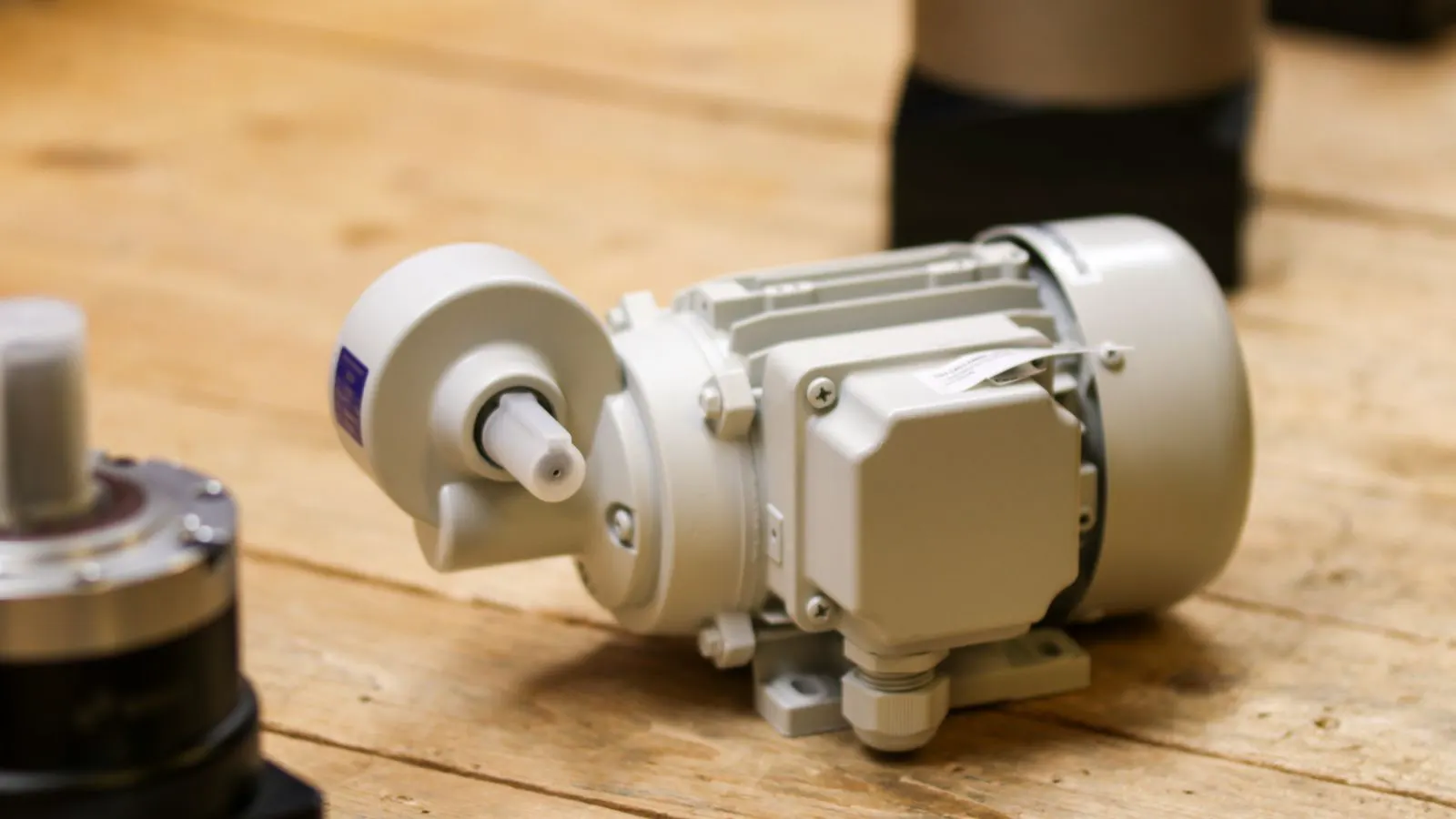
Selecting mixer motor power requires matching rated torque to the peak load of the specific food product. You must account for viscosity changes, blade geometry, and safety factors. A correctly sized motor prevents stalls, overheating, and product damage during mixing and cooking operations.
- Match motor torque to the peak load, not just the average load of the product mixture.
- Use a service factor of at least 1.5 for high-viscosity or fibrous food products.
- Check motor duty ratings and ambient temperature derating before final selection.
- Verify that the gearbox ratio delivers enough torque at the shaft speed required for the recipe.
- Document the load calculation to support future maintenance and recipe changes.
Why Motor Power Is Not the Same as Horsepower
Many buyers select motors by nameplate horsepower without checking torque. This is a common mistake in food processing. A 15 horsepower motor can stall if it cannot produce enough torque at low speed. A 10 horsepower motor can work well if the load is low and the speed is higher.
Horsepower is a measure of power. Torque is a measure of turning force. Mixing loads change constantly. A liquid dough at low viscosity is easy to start. The same dough after hydration and mixing becomes dense. The motor must handle that peak condition.
The relationship between power, torque, and speed is direct. Power equals torque multiplied by speed. If the speed drops while the load stays the same, the torque demand rises. In a planetary mixer, the blade geometry often keeps the load high even at low speeds. The motor must maintain that torque without losing speed.
The key question is not which motor is largest. The key question is which motor can hold speed and torque through the entire batch cycle. A motor that meets the average load will fail during the peak. You need to look at the worst moment, not the average moment.
How to Estimate the Mixing Load
Start with the product. Different food products create very different loads. Thin batters are light. Thick pastes, doughs, and fibrous vegetable mixes are heavy.
Look at the product state at the start, middle, and end of mixing. A cooker that also mixes will see the load rise as the product thickens. A mixer that handles cold ingredients will see a higher starting load than one handling room temperature ingredients. Cold ingredients are stiffer and resist blade movement more than warm ones.
Consider the bowl and blade design. A larger bowl with a more aggressive blade increases the load. A smaller, gentler paddle reduces it. The distance of the blade from the bowl wall matters. If the blade hits the wall often, the load spikes.
Write down the peak moment. This is the moment of highest resistance. It is often when the product is at its thickest or when the blade breaks through a dense mass. In a bread dough mixer, the peak often occurs after the gluten develops and the dough becomes elastic. The blade has to pull the dough against itself and the bowl walls.
Include the batch size in your calculation. A full bowl creates more resistance than an empty or partially filled bowl. If your standard batch fills the bowl to 80 percent, the load is different from a batch that only fills it to 50 percent. Always calculate for the maximum intended fill level.
Do not forget the mixing time. A load that lasts for five seconds is different from a load that lasts for fifteen minutes. The motor must be able to sustain the torque for the entire duration. Short peaks can be handled by a smaller motor with a high service factor. Long peaks require a larger continuous rating.
What to Look for in a Criteria Table
Use this table to compare motor options against your actual process. Fill it in with your plant data before you request quotes.
| Criterion | What to look for | Why it matters |
|---|---|---|
| Rated torque | Torque at rated speed and voltage | Determines if the motor can start and hold the load |
| Service factor | Multiplier above rated power, usually 1.5 or higher | Allows the motor to handle peak loads without damage |
| Duty cycle | Continuous, intermittent, or periodic operation | Prevents overheating during repeated batches |
| Ambient temperature | Motor rating for your plant temperature | High heat reduces motor output and lifespan |
| Gearbox ratio | Ratio between motor speed and shaft speed | Matches speed to mixing needs and multiplies torque |
| Voltage and phase | 3-phase or single-phase, voltage level | Must match plant electrical supply to avoid trips |
Do not skip the service factor. A motor with a low service factor may run fine in a lab but fail in a plant that mixes thick products for hours. The service factor is a multiplier on the nameplate power. A 15 horsepower motor with a 1.5 service factor can handle up to 22.5 horsepower of load for a period. It cannot run at 22.5 horsepower continuously, but it can handle the peaks.
Check the duty cycle carefully. If your mixer runs for 30 minutes, stops for 5 minutes, and repeats, that is an intermittent duty. A motor rated for continuous duty may be fine, but a motor rated for light intermittent duty will overheat. The cooling fan speed is tied to the motor speed. If the motor slows down under load, the cooling also slows down. This creates a feedback loop that accelerates heating.
Ambient temperature is a hidden variable. A motor rated for 40 degrees Celsius will lose output in a plant that runs at 50 degrees Celsius. The insulation rating of the motor is designed for a specific temperature. If the plant is hotter, the motor must derate. This means you need a bigger motor to get the same effective power.
How Gearbox Ratios Affect Selection
The gearbox changes speed and torque. A high ratio gives low speed and high torque. A low ratio gives high speed and low torque.
For dense, thick products, you need high torque at low speed. A high ratio gearbox is usually better. The motor speed may be high, but the output shaft speed is low. This gives the blades enough time to move through the dense mass without stalling. A high ratio also protects the gearbox from shock loads. If the blade hits a dense clump, the high torque capability prevents the gearbox from seizing.
For thin batters or soups, you need higher speed to incorporate air and mix quickly. A lower ratio gearbox may be better. The motor can run at a higher output speed. The torque demand is lower. However, if the speed is too high, the product may splatter. In a planetary mixer, too much speed can throw liquid out of the bowl. You need to balance mixing efficiency with containment.
Check the motor nameplate speed. Most industrial motors run at fixed speeds, such as 1450 or 1750 rpm. The gearbox ratio determines the shaft speed. If the shaft speed is too high, the product may splatter or break down. If it is too low, mixing may take too long.
There is a trade-off between speed and torque. A high ratio increases torque but reduces speed. A low ratio does the opposite. You must match the ratio to the product. A ratio that works for a thin soup will stall on a thick dough. A ratio that works for a heavy dough may spin too fast for a light batter.
Consider the gearbox type. Gearbox ratios are not always integer numbers. A 40 to 1 ratio gives a shaft speed of 1450 divided by 40, which is about 36 rpm. A 20 to 1 ratio gives about 72 rpm. The difference is significant. At 36 rpm, the blade moves slowly and gently. At 72 rpm, it moves faster and mixes more aggressively.
How to Check Starting Torque
Starting torque is the torque available when the motor first turns on. It is often higher than running torque, but not always enough for the load.
Some mixers start with the bowl full. Others start empty. A full start is much harder. If your process requires starting with a full bowl, you need a motor with high starting torque. A full bowl of cold, dense ingredients creates a high initial resistance. The motor must overcome this resistance to get the shaft turning.
Look at the motor data sheet. It should list full load torque and starting torque. If it only lists full load torque, ask for the starting torque figure. A standard induction motor may have a starting torque that is only 1.5 to 2 times its full load torque. That may not be enough for a dense dough.
If the starting torque is low, consider a motor with a higher service factor or a different design. Some motors are built for high starting torque. They cost more but perform better under heavy starts. A high starting torque motor often has a different rotor design. It may have a deeper rotor slot or a different winding configuration. These changes increase the starting torque but may reduce efficiency.
Check the starting method. If the motor uses a star-delta starter, the starting torque is reduced. A star-delta starter limits the inrush current, but it also reduces the starting torque to about 37 percent of direct-on-line starting. If your load requires high starting torque, a star-delta starter may not be enough. You may need a direct-on-line start or a soft starter with a specific torque boost.
How to Verify the Calculation in the Plant
Do not rely on a paper calculation alone. Run the mixer with the actual product. Watch the motor. Listen to the sound.
A healthy motor runs at steady speed. A struggling motor slows down and the sound changes. It may make a groaning noise. If the speed drops too much, the mixer may not mix properly. The product may be undermixed.
Check the motor current. Use a clamp meter. If the current is near or above the rated full load current for most of the cycle, the motor is overloaded. This will cause overheating and early failure. The current should rise slightly during the peak load and then settle. If it stays high, the motor is working too hard.
Test the worst case. Use the thickest product you will run. Use the largest batch size. Run the mixer for a full batch. If it holds speed and torque, it is likely good. If it stalls, you need a bigger motor or a different gearbox.
Measure the temperature of the motor housing after a full cycle. A good infrared thermometer gives a quick reading. If the housing is too hot to touch comfortably, the motor is running above its thermal limit. The nameplate temperature class indicates the insulation rating. Class B insulation is rated for 130 degrees Celsius. Class F is rated for 155 degrees Celsius. The winding temperature is higher than the housing temperature. Do not rely on housing temperature alone. Use the current reading as the primary indicator of thermal load.
Common Mistakes to Avoid
The first mistake is choosing a motor that is too small. It seems cheaper, but it fails often. The downtime from repairs costs more than the difference in motor price. A small motor also causes poor mixing. If the motor stalls, the product is not mixed evenly. This leads to rework or waste.
The second mistake is choosing a motor that is too large. It wastes energy and may over-mix the product. A very powerful motor can break down delicate ingredients that need gentle handling. In a salad mixer, a high torque motor can shred leaves that should remain intact. In a creaming mixer, too much power can break emulsions.
The third mistake is ignoring the gearbox. A large motor with the wrong gearbox can still fail. The gearbox must match the torque and speed needs of the product. A motor with high torque but the wrong ratio will not deliver the torque at the shaft. The gearbox is part of the motor system. It must be selected together with the motor.
The fourth mistake is ignoring ambient temperature. A motor rated for 40 degrees Celsius will lose output in a hot plant. If the plant is hotter, the motor derates. You need a bigger motor or better cooling. In a bakery, the ambient temperature near the oven can be much higher than the average plant temperature. A motor in a cool area may not work in a hot area.
The fifth mistake is not documenting the load. If you do not write down the peak load and the motor size, the next buyer may make a wrong choice. Keep the calculation and test results with the machine records. Future maintenance technicians need to know why the motor was selected. This information helps them make correct decisions when the motor fails.
Decision Checklist
Use this checklist before you order a motor.
- Define the peak product load and the moment of highest resistance.
- Select a gearbox ratio that matches the required shaft speed.
- Calculate the required torque at the output shaft.
- Add a service factor of at least 1.5 for food products.
- Check the motor duty cycle and ambient temperature rating.
- Verify the starting torque is enough for full bowl starts.
- Confirm the electrical supply matches the motor voltage and phase.
- Run a test batch with the actual product and monitor motor current.
- Document the selected motor and the load calculation.
- Keep the spare motor or service plan ready for future maintenance.
Frequently asked questions
Can I use a motor with a higher horsepower if the torque is low?
No. Horsepower does not guarantee enough torque. You must check the torque rating at the required speed.
How do I know if the motor is overloaded?
Check the motor current with a clamp meter. If it stays near or above the rated full load current, the motor is overloaded.
Do I need a different motor for cold and hot ingredients?
Yes. Cold ingredients are often denser and require more torque. Hot ingredients are usually easier to mix but may require higher speed for consistency.
Is a larger motor always better for a mixer?
No. A motor that is too large may over-mix delicate products and waste energy. Match the motor to the actual load.
How often should I check motor current?
Check it during initial setup and after any recipe change. Periodic checks during maintenance help catch wear before failure.