Selecting between batch and continuous mixers depends on product stability, throughput, and consistency needs. Batch systems suit variable or small-batch thermalized items, while continuous mixers support high-volume, uniform production lines.
- Batch mixers offer flexibility for recipe changes and shorter production runs but require careful thermal control to avoid hot spots.
- Continuous mixers maintain uniform thermal profiles across high volumes and reduce manual intervention, but they are less adaptable to frequent recipe changes.
- Mixer type selection should account for product viscosity, required holding time, and downstream process compatibility.
- Batch consistency depends on heating uniformity, mixing time, and material properties rather than equipment size alone.
- Validation of thermal zones and mixing efficiency is required before either system is used for new products.
The core trade-off in thermal mixing
The choice between a batch and a continuous mixer shapes how a plant handles heat, product uniformity, and line scheduling. Batch mixers heat and mix a fixed quantity of material in a closed or open vessel, then discharge the finished product. Continuous mixers feed material through a mixing and heating zone at a steady rate, producing a continuous stream of thermalized output.
The decision is not simply about speed. It is about how well the chosen system holds temperature, shear, and residence time within acceptable limits for a specific product. A sauce, a soup base, and a dairy blend all respond differently to thermal exposure and mixing intensity.
What mixer type selection actually involves
Mixer type selection in thermal processing requires reviewing product behavior, target throughput, and process control. The first question is whether the product needs a fixed holding time at a specific temperature. The second is whether the formula changes frequently. The third is whether downstream equipment can accept a continuous feed.
Heating method matters. Jacketed vessels, steam coils, and direct heating all create different thermal gradients. In a batch system, the wall temperature and core temperature can differ during the first minutes of heating. In a continuous system, the residence time and flow velocity determine how evenly the product is exposed to heat.
Product viscosity controls mixing demand. Thin fluids circulate quickly and reach temperature faster. Thick pastes move slowly and may form cold zones near vessel walls or in dead spots. The mixing element must match the viscosity class of the material, not just the volume being handled.
Comparison of batch and continuous approaches
| Option | Best for | Limitations |
|---|---|---|
| Batch mixer with jacketed vessel | Small to medium batches, recipe changes, multiple SKUs | Slower throughput, longer cleaning cycles, greater operator attention |
| Batch mixer with static mixing elements | Products requiring high shear inside the vessel | More complex cleaning, potential for wear, higher maintenance |
| Continuous tubular mixer | High-volume, stable formulations, inline heating | Less flexible for frequent formula changes, requires steady feed |
| Continuous ribbon or paddle heated mixer | Viscous products needing uniform heating without high shear | Limited maximum throughput, sensitive to blockage or material buildup |
| Hybrid batch-continuous system | Plants running both small batches and sustained production | Higher capital cost, more controls, more complex validation |
Each option has a practical boundary. A tubular system works well when the feed is steady and the product does not require a long hold. A jacketed batch vessel works well when the operator must adjust heating time based on product density or incoming temperature.
When batch mixing is the better fit
Batch mixing is the better fit when the plant processes multiple products in the same vessel or when the recipe changes often. A plant making five different soup bases in a single line can schedule short runs, changeover quickly, and validate each batch independently. The vessel can be rinsed between products, and the process can be adjusted for each formula.
Batch systems also suit products that require a specific holding phase after reaching target temperature. Some thermalized items need a set time at a defined temperature to achieve the required safety or quality state. In a batch vessel, that holding time is easy to control and document.
The limitation is throughput. A batch cycle includes heating, holding, cooling, discharge, and cleaning. If the plant needs a high volume of a single stable product, the cycle time becomes a bottleneck. Batch systems also demand more operator attention. The operator must confirm that the product reaches the target temperature, that the mixing pattern is effective, and that no cold pockets remain.
When continuous mixing is the better fit
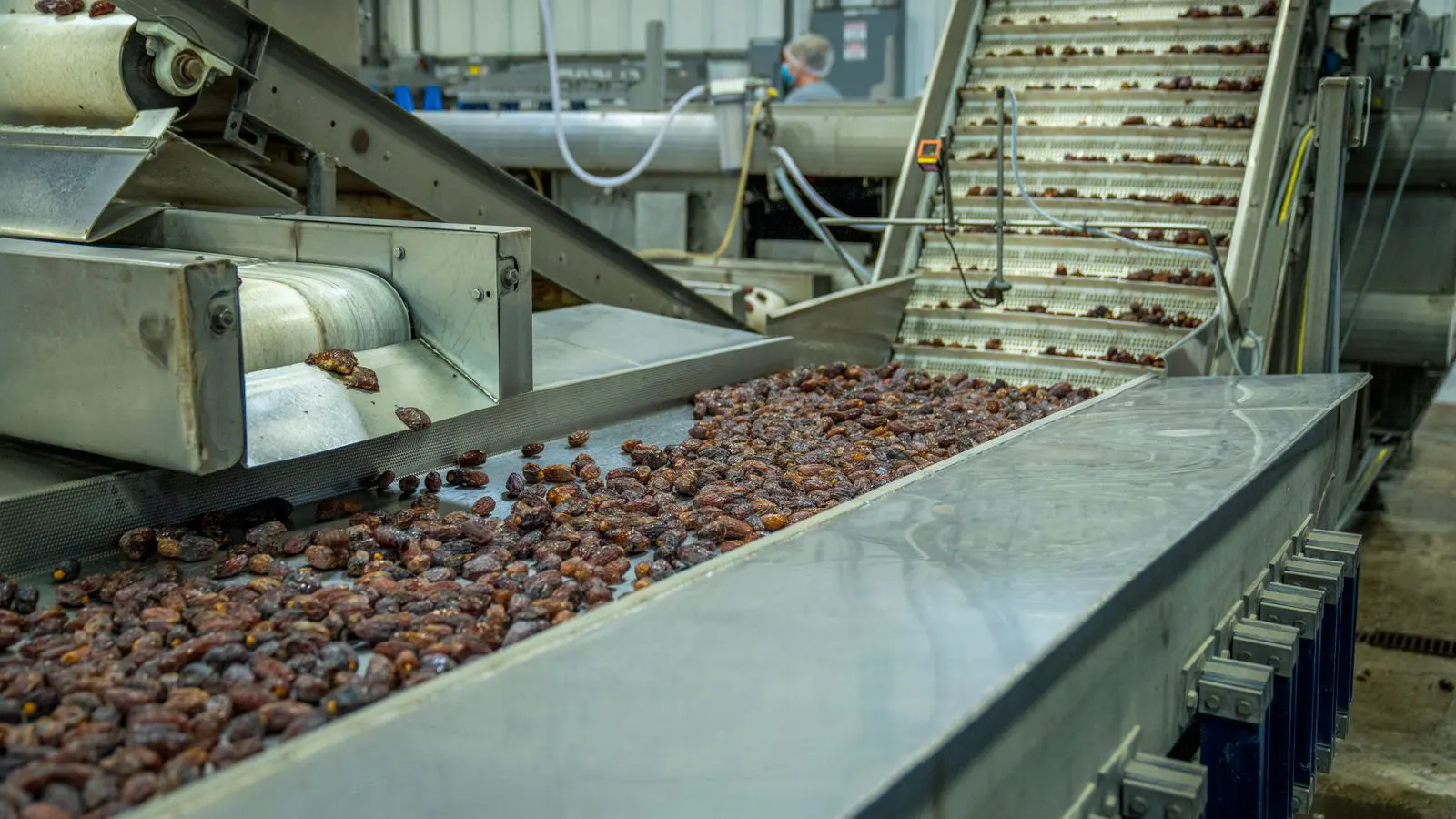
Continuous mixing is the better fit when the product formulation is stable and the plant needs sustained output. A plant producing one type of thermalized sauce at a fixed recipe can run a continuous line with minimal recipe changes. The product flows through a heated mixing zone at a controlled rate, and the output is uniform by design.
Continuous systems reduce the need for repeated discharge and cleaning. The same line can run for extended periods, which lowers labor time and reduces batch-to-batch variation. The thermal profile is consistent because the residence time is fixed by flow rate and zone length.
The limitation is flexibility. If the recipe changes, the line may need a new validation. If the feed material varies in viscosity, the residence time and heat input must be adjusted. Continuous mixers are also more sensitive to feed interruptions. A pump stoppage or valve fault can create a product that is overheated or under-mixed.
Batch consistency in thermal systems
Batch consistency depends on how evenly heat reaches the product core. A large vessel with a slow mixing pattern may heat the walls before the center. The result is a product that appears uniform on the surface but contains cooler material at the bottom or center. This issue is common in high-viscosity products.
Mixing element design affects this. A flat paddle may not reach the vessel bottom effectively. A helical or ribbon element can move material from the bottom to the center more consistently. The number of mixing elements and their speed also change how quickly the core temperature rises.
Temperature measurement location matters. A sensor mounted only at the vessel wall does not represent the product core. A sensor placed in the mixing zone or at the discharge point gives a better indication of the actual product temperature. For validation, the plant should confirm that the minimum temperature in the vessel reaches the target during the holding phase.
Continuous consistency and thermal profile control
In a continuous system, consistency is controlled by residence time and heat input. If the flow rate changes, the residence time changes. A higher flow rate reduces the time the product spends in the heating zone, which can lower the final temperature. A lower flow rate increases residence time and can overheat the product.
The plant must monitor flow rate and temperature in real time. Interlocks can stop the feed if the temperature falls below a set point or if the flow rate drifts outside the validated range. The thermal zone should be divided into sections so that each section can be checked independently.
A continuous system also depends on feed uniformity. If the feed contains lumps, separated phases, or variable viscosity, the mixing element may not process it evenly. Pre-mixing or homogenization before the thermal zone can improve performance. The goal is to enter the heating zone with a stable material state.
Validation and process control
Both batch and continuous systems require validation before new products are processed. The validation should confirm that the product reaches the required temperature, that the mixing pattern is effective, and that the discharge or output stream is uniform. For batch systems, the test should include the slowest expected heating rate and the most viscous product state. For continuous systems, the test should include the minimum and maximum flow rates within the validated range.
The plant should record temperature at multiple points during the process. A single sensor is not enough. In batch vessels, temperature should be checked at the wall, the center, and the discharge. In continuous mixers, temperature should be checked at each zone and at the outlet.
Cleaning and sanitation also affect consistency. Residual product on vessel walls or mixing elements can change the next batch or continuous run. A cleaning validation should confirm that no material remains in dead zones or crevices. This is especially important when switching between products with different allergens or flavors.
Practical selection checklist
- Identify the product viscosity range and any changes in feed material.
- Determine the required thermal state, including target temperature and holding time.
- Compare expected batch size or continuous throughput.
- Review recipe change frequency and product variety.
- Check downstream equipment compatibility with batch discharge or continuous feed.
- Confirm cleaning and sanitation requirements between products.
- Define the validation points and control interlocks.
A plant that processes three products in small batches will likely favor a batch system. A plant that runs one product at high volume will likely favor a continuous system. A plant that runs both may need a hybrid arrangement or separate lines.
Final guidance
Mixer type selection is a process decision, not a equipment decision. The equipment must match the product behavior and the plant schedule. Batch mixing gives flexibility and easier recipe management. Continuous mixing gives uniformity and higher throughput for stable products. The right choice depends on how well the system controls temperature, shear, and residence time for the specific thermalized product.
Planners should validate the chosen system with the actual product, not with water or a substitute. The real product may behave differently in viscosity, foam, or heat response. A small test run with temperature mapping and discharge checks will reveal issues that are not visible in a spec sheet.
Frequently asked questions
Can a batch mixer produce the same consistency as a continuous mixer?
Yes, if the vessel, mixing element, and temperature control are designed for the product. Batch consistency depends on core temperature uniformity and mixing time, not just the equipment type.
What is the main drawback of continuous mixers for multi-SKU plants?
Continuous mixers are less flexible when recipe changes are frequent. Each change may require revalidation, and the line may need dedicated cleaning or product separation.
How do I know if my product needs a longer holding time?
The required holding time depends on the product safety and quality targets. The process validation should confirm the minimum temperature and the time needed to achieve the target state.
Are jacketed batch vessels suitable for very thick products?
They can be, if the mixing element moves the product effectively and the jacket provides enough heat. Thick products may need a slower mixing speed and a longer heating cycle.
What should I check before choosing a continuous mixer?
Check flow rate stability, residence time, temperature control at each zone, and compatibility with downstream equipment. The feed must be uniform and the line must have proper interlocks.